Beautiful Plants For Your Interior
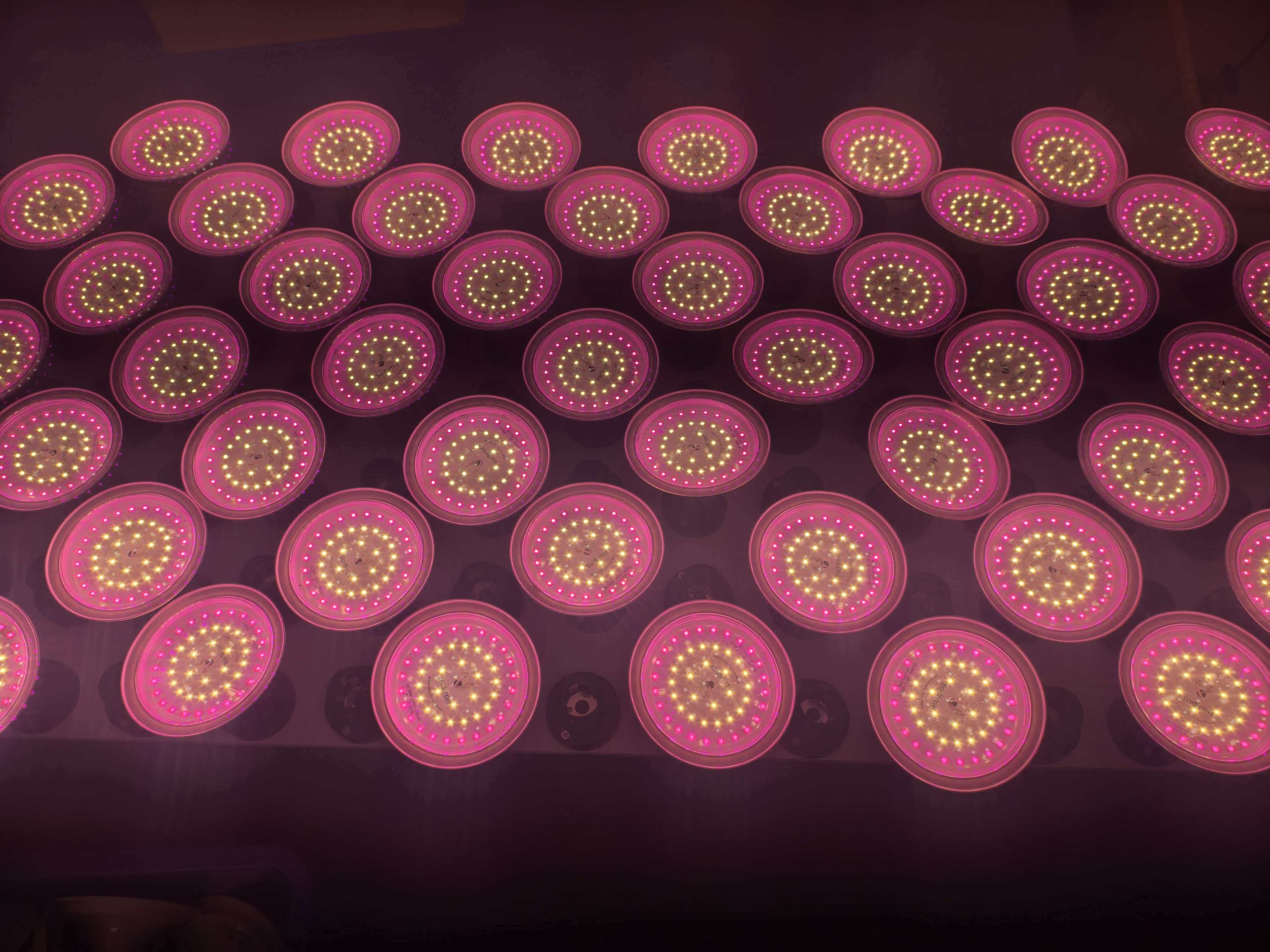
Por qué el factor de potencia es importante en los sistemas comerciales de iluminación LED para cultivo
When selecting LED grow lights, commercial growers usually focus on well‑known parameters: lamp power, light spectrum, PPFD, service life and waterproof rating.
However, for commercial agricultural projects and large‑scale planting bases, Power Factor (PF) is another non‑negotiable key parameter you should not overlook.
Power factor will not directly change how much light your crops receive. But it heavily influences electrical efficiency, system current draw and long‑term operational reliability of your whole commercial grow light installation.
If you run hundreds or thousands of grow lights simultaneously, the electrical performance of every single fixture shapes the stability of your entire agricultural lighting solution. When sourcing professional LED grow lights, evaluate not only light output, but also energy utilization, system safety and long‑run operating costs.
Tadiran delivers professional LED grow light solutions built for commercial agriculture, covering outdoor cultivation and greenhouse projects for blueberries, strawberries, flowers and more. Visit Tadiran Grow Light Products >>]
Power Factor (PF) is a core metric measuring electric‑energy utilization efficiency of electrical equipment.
Simply defined: Power factor shows what percentage of input electricity is converted into useful working energy for your fixtures.
Power factor ranges between 0 and 1:
For home growing or small greenhouses with only a small quantity of lamps running, power factor differences may feel negligible.
Nevertheless, for commercial LED grow‑light farms operating hundreds or thousands of plant lights at once, the electrical performance of every lamp accumulates and impacts the performance of the complete lighting system.
At identical real‑power output, LED grow lights with high power factor reduce total system current.
For large commercial farms, this brings practical benefits:
This point is extremely meaningful for outdoor LED grow‑light projects where power supplies sit far away from planting zones. Controlling system current reasonably is essential for reliable large‑scale grow‑light design.
Commercial grow‑light projects deploy massive quantities of lamps with long‑distance cabling.
Excessively high operating current forces project teams to accept:
Accordingly, for large‑scale agricultural lighting projects, besides lamp quantity and rated wattage, electrical specifications including power factor deserve full consideration. A well‑designed commercial grow‑light system must satisfy crop light requirements and guarantee multi‑year stable running.
Agricultural supplemental lighting runs for very long hours every year.
For commercial operators, the core concern goes far beyond “can the light turn on”. The real priority is whether the whole installation can run stably for multiple growing seasons.
Premium‑grade commercial LED grow lights should combine:
Many buyers hold a misunderstanding: higher power factor definitely means lower electricity bills. This statement is not completely correct.
The actual active‑power consumption of a plant grow light is mainly determined by:
Calculation example: A 15 W plant grow light running 6 hours per day
15 W × 6 h × 30 d ≈ 2.7 kWh monthly power consumption
Power factor mainly governs system‑level electrical efficiency and ampere draw, instead of directly changing a lamp’s rated active power.
Energy differences caused by PF remain limited for small‑scale growing. Its practical value becomes prominent on commercial sites running hundreds or thousands of grow lights simultaneously.
Related reading: [What Should I Look for When Buying an LED Grow Light? Commercial Sourcing Guide >>]
For commercial LED plant‑grow‑light installations, we recommend selecting fixtures with power factor ≥0.9.
Bear in mind: power factor is never the single purchasing criterion for commercial grow lights. Growers must comprehensively assess multiple factors:
Only well‑matched sets of parameters can build an efficient, stable commercial agricultural supplemental‑lighting system.
Tadiran LED grow lights deliver complete professional full‑spectrum lighting solutions built for commercial agriculture. Our fixtures serve dragon‑fruit plantations, greenhouse blueberries, strawberries, cut‑flowers and other crops needing artificial light supplementation.
Designed for multi‑year continuous agricultural operation, key product features: ✅ Power Factor ≥0.9, improving electrical efficiency and system stability for large‑scale deployments ✅ Tunable full‑spectrum LED technology covering diverse plant growth phases ✅ Heavy‑duty professional waterproof construction adapted for outdoor farm environments ✅ Trustworthy cable & connector solutions for multi‑lamp large‑scale systems ✅ Customizable lighting layout solutions based on farm scale, planting layout, crop varieties and local grid conditions
Choosing commercial LED grow lights is not just purchasing individual lamps. It means constructing a stable, long‑term agricultural production lighting system.
👉 [Explore Tadiran commercial LED grow light product catalogue >>]