Beautiful Plants For Your Interior
Beautiful Plants For Your Interior

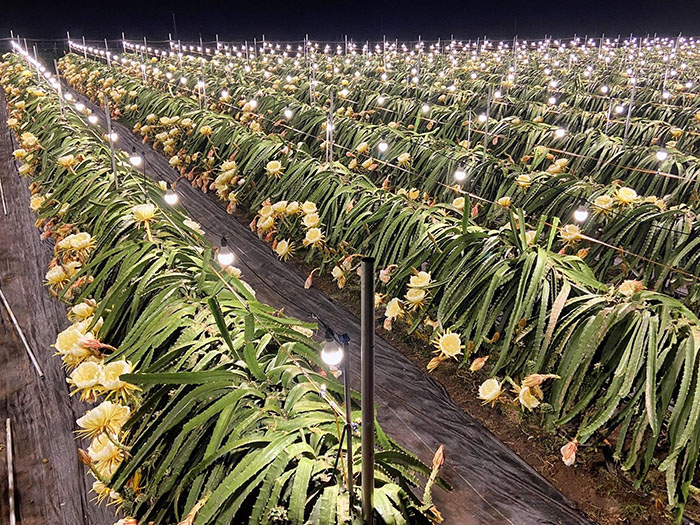
When evaluating modern indoor farming setups, commercial growers often ask: are purple led grow lights good for high-yield crop production? In the highly competitive market of commercial indoor farming, vertical agriculture, and high-yield greenhouse cultivation, managing the spectral composition of your lighting setup is a foundational pillar of operational success. As growers look to maximize photosynthetic conversion efficiency and optimize crop yield morphology, selecting the right industrial LED grow light remains one of the most critical capital investment decisions.
For global distributors, commercial greenhouse planners, and procurement managers searching for high-efficiency solutions on specialized platforms like FruitGrowLight, understanding the science of light spectrums is essential. It is no longer just about delivering raw photon quantity; it is about the precision of photon quality. The market is flooded with various spectrum options, making it crucial to evaluate older spectral designs against modern, industry-standard advancements to ensure long-term commercial profitability.
A very common question asked by both emerging farm operators and retail distributors entering the market centers around the distinct, bright magenta fixtures that dominated early indoor farming setups. This technical analysis explores that exact topic by dissecting the physical limitations of early dual-band “blurple” light fixtures, comparing them to modern high-efficacy sun-like full-spectrum arrays, and examining how different wavelengths impact plant development.
To capture Google Featured Snippets and provide direct technical clarity, this section answers the industry’s most debated spectral question. When asking are purple led grow lights good for commercial cultivation, the short answer is no, they are no longer considered good or efficient when compared to modern standards. While purple (often called “blurple”) lights can technically sustain basic plant growth because they deliver essential red and blue wavelengths, they are based on outdated technology from over a decade ago. They lack the full spectral distribution required to maximize crop quality, yield density, and chemical profile potential in high-volume commercial indoor farming.
Early manufacturers built these purple fixtures because older LED technology struggled to efficiently produce broad, white light. By clustering cheap red and blue diodes together, they created a high-intensity light that looked purple to the human eye. However, modern plant biology and large-scale commercial farming data have proven that crops perform significantly better under a well-balanced, sun-like white LED grow light system. Broad-spectrum systems include vital green, yellow, and far-red wavelengths that deeply penetrate the plant canopy, accelerate photosynthesis, and create a much safer, more functional working environment for greenhouse technicians.
To understand why purple fixtures became so widespread, we have to look back at the early physics of solid-state lighting. Early plant science focused heavily on the McCree action spectrum, which showed that plants absorb red light (around 640nm–660nm) and blue light (around 430nm–450nm) at the highest rates to drive photosynthesis. Because early white LEDs were inefficient and expensive to manufacture, factory engineers built specialized horticultural fixtures using only targeted red and blue monochromatic chips. This combination produced a distinct, high-intensity magenta or purple hue.
While this targeted dual-band approach worked in small, early laboratory environments, it flooded the commercial market with cheap, low-grade “blurple” imports. If you wonder are purple led grow lights good for long-term facility ROI, these entry-level fixtures fall short. They often use inferior, low-driven diodes packaged in heavy plastic housings with loud cooling fans. This design creates a severe mismatch between actual power consumption and usable photon output, falling far short of the strict performance standards required by modern, high-efficiency commercial farming facilities.
When evaluating whether are purple led grow lights good for scale operations, large-scale commercial indoor facilities and vertical farms have almost completely phased out purple fixtures in favor of advanced white LED grow light technologies. This industry-wide shift is driven by three major physiological and operational limitations of the old purple spectrum:
By upgrading to an advanced full-spectrum white LED grow light system, commercial facility managers get the best of both worlds: a highly efficient, sun-like spectrum that maximizes plant vitality, and a bright, natural working environment that allows staff to easily monitor and manage crop health.
| Spectral Category | Legacy Purple (Blurple) Systems | Modern Full-Spectrum White Systems | Commercial Farm ROI Impact |
|---|---|---|---|
| Wavelength Range | Narrow: Only discrete Red & Blue spikes (450nm + 660nm). | Broad: Continuous 380nm – 780nm (Includes Green, UV, & Far-Red). | Full spectrums stimulate more photoreceptors, driving higher yields. |
| Photosynthetic Efficacy | Low: Typically 1.2 – 1.8 μmol/J due to outdated diode builds. | High: 2.7 – 3.2 μmol/J using premium white chip architectures. | Modern white LEDs cut energy costs in half for the same light output. |
| Canopy Penetration | Poor: Light is trapped at the top; lower canopy is starved. | Excellent: Green and Far-Red photons drive deep into dense canopies. | Creates uniform flower and fruit development from top to bottom. |
| Labor Diagnosis Safety | Extreme eye fatigue; blinds natural plant color vision. | Natural CRI (> 85); bright, white daylight working conditions. | Allows staff to instantly spot and treat pests or disease outbreaks. |
| Crop Application | Limited: Mostly small-scale hobby growth or simple cloning. | Universal: Optimized for high-yield leafy greens, fruits, and flowers. | Provides a single, flexible solution across all crop growth cycles. |
Achieving top-tier crop yields and maintaining a profitable commercial facility requires moving past outdated lighting trends and partnering with an industrial manufacturer that values technical precision. FruitGrowLight is a global B2B manufacturer and professional OEM/ODM supplier specializing in high-efficacy, full-spectrum LED grow light equipment built for heavy-duty commercial operations.
We completely avoid the low-efficiency, old-school purple diode designs. When clients ask us are purple led grow lights good for modern vertical agriculture, our engineers always recommend transitioning to broad-spectrum white light arrays. Built with premium Samsung, Osram, and San’an chips driven by ultra-reliable, dimmable power drivers, our commercial product lines deliver uncompromised photon delivery. Our manufacturing facility combines fully automated assembly lines with comprehensive environmental stress testing, ensuring every fixture delivers industrial-grade performance, excellent moisture resistance, and long-lasting spectrum stability over years of intense operation.
When you choose FruitGrowLight as your long-term commercial OEM manufacturing partner, you gain access to:
Our commercial product lines carry official CE marking (CE-EMC and LVD) certifications, guaranteeing zero electromagnetic interference with surrounding municipal or automated facility networks while ensuring absolute electrical safety.
While purple lights can technically work for basic seed starting because seedlings utilize blue wavelengths to grow roots, they are not ideal. Modern full-spectrum white lights that include balanced green and yellow wavelengths produce sturdier, thicker stems and healthier root structures without the risk of stretching or light stress common under low-grade purple fixtures.
No. In commercial greenhouse setups, purple lights distort the natural color vision of human operators and fail to deliver the deep canopy penetration provided by full-spectrum white lights containing green and far-red spectrums.
Most cheap purple fixtures on the market use older, low-quality monochromatic diodes driven by inefficient internal power supplies. These older components convert a large portion of electricity into heat rather than usable light, resulting in very low Photosynthetic Photon Efficacy (PPE) scores, typically falling below 1.5 μmol/J. Modern full-spectrum chips regularly exceed 2.8 μmol/J, nearly doubling your energy efficiency.
Yes, green light is highly valuable in commercial farming. While plants look green because they reflect a portion of it, they actually absorb a significant amount of green light to drive photosynthesis deep within plant tissue. Green light has excellent canopy penetration properties, passing through upper leaves to power lower foliage that red and blue light cannot reach, leading to higher overall harvest yields.
CE-EMC certification proves that light power supplies are fully shielded, preventing electromagnetic interference from blocking wireless sensors, automated nutrient dosers, or automated ventilation equipment. LVD certification ensures all high-voltage electrical tracks are safely insulated against dust and moisture ingress, preventing short circuits and ensuring a safe workplace for facility staff.
Yes, working under pure magenta/purple light causes rapid eye fatigue, dizziness, and headaches, which can lower overall labor productivity. Additionally, it distorts natural color vision, making it incredibly difficult for your team to identify early signs of mold, pest issues, or nutrient deficiencies until it is too late. Modern full-spectrum white light offers a clean, bright daylight workspace that ensures worker comfort and accurate crop inspection.
So, are purple led grow lights good for future-proofing your business? Do not let low-efficiency, legacy purple lighting systems slow down your crop development and limit your farm’s profit potential. Protect your commercial greenhouse or vertical farming investment by switching to modern, sun-like full-spectrum technology. Whether you are upgrading an existing facility, scaling up a commercial facility, or sourcing high-demand inventory for an international wholesale network, FruitGrowLight provides the manufacturing scale, international compliance, and reliable field performance your business can count on.
To request a custom Dialux photometric canopy mapping or factory-direct wholesale pricing, contact our technical B2B consulting team at info@fruitgrowlight.com or send us a message directly to request a custom OEM quote.
Scan QR code to chat with our grow light specialist!