Beautiful Plants For Your Interior
Dense crop canopies shadow lower leaves and fruit clusters. Discover why under-canopy LED grow lights optimize photosynthesis, improve grape color, and boost sugar accumulation.
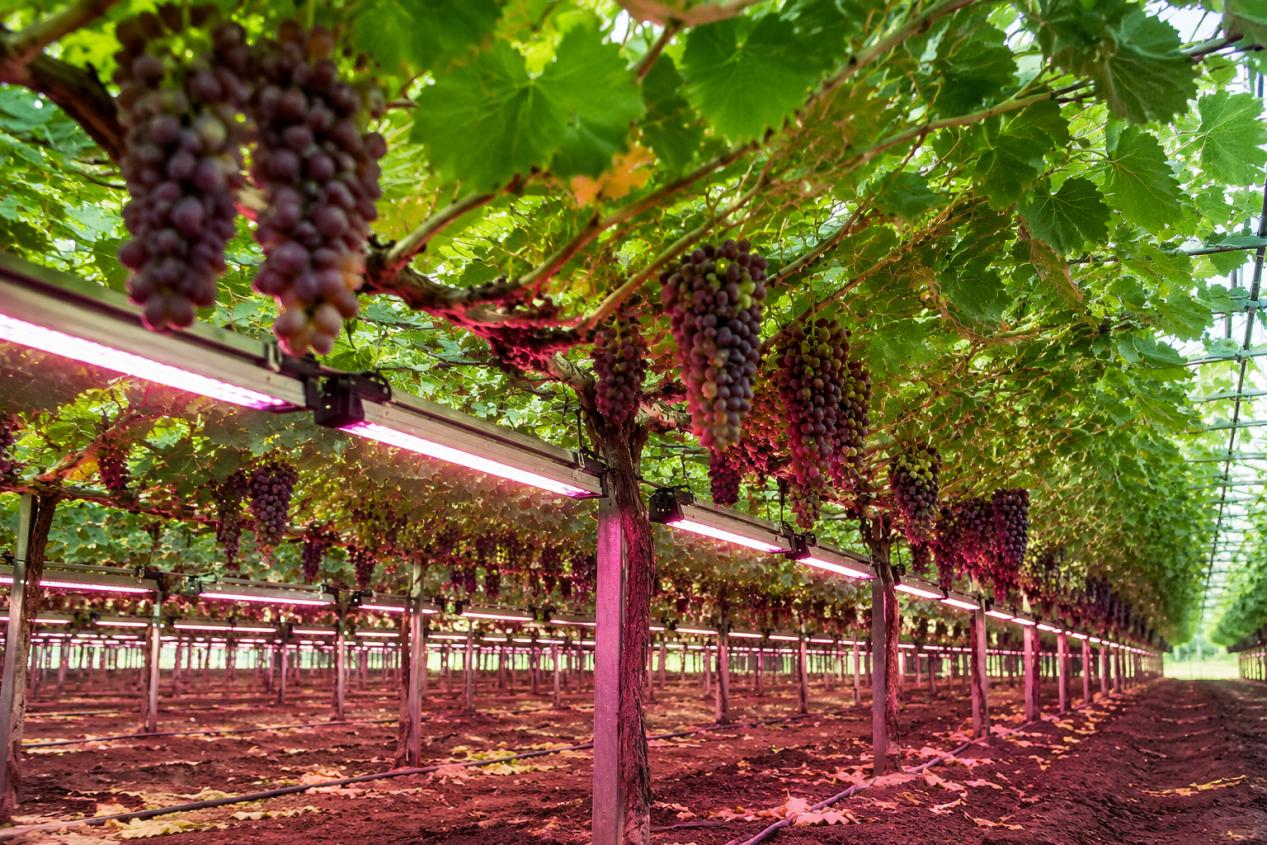
¿Por qué es necesaria la iluminación LED bajo el dosel? Un caso de estudio sobre el cultivo de uva.

In modern high-efficiency agriculture, supplemental growlights (luz LED para cultivo) serve as an indispensable tool for enhancing crop yield, elevating fruit quality, and extending production cycles. Traditionally, supplemental lighting fixtures are mounted overhead to extend daily photoperiods and supplement photosynthetically active radiation.
However, for climbing and vining crops with dense vegetative growth—such as grapevines—top-lighting alone falls short. Dense upper leaves absorb and reflect the vast majority of downwelling light, leaving the lower canopy and developing fruit clusters in perpetual shadow.
This is precisely why under-canopy lighting (iluminación bajo el dosel) has emerged as a game-changing solution, ensuring multi-layer light penetration and optimal photon utilization throughout the entire plant canopy.
Grapevines are vigorous climbing plants that naturally establish thick, multi-layered foliage architectures. As the vines develop, branches and leaves overlap, creating a dense upper canopy screen.
This problem is particularly severe in high-density commercial greenhouses and trellis-trained vineyards where row shading limits natural ambient daylight.
Photosynthesis requires uniform photon distribution across all viable foliage—not just the uppermost leaf layer. Positioning under-canopy LED grow lights (luz LED de espectro completo para cultivo) below or alongside the vine structure directs supplemental light straight to the underpowered foliage and developing fruit.
In viticulture, maintaining active, healthy lower leaves is vital. These lower leaves function as primary local source organs that directly translocate carbohydrates into adjacent grape clusters, driving fruit sizing and sugar accumulation.
Premium table and wine grape production demands exceptional cluster uniformity, optimal berry sizing, rich color development, and high sugar concentration.
Because grape clusters develop deep within the canopy zone, under-canopy LED fixtures deliver essential photons directly to the fruit zone during overcast periods or short-day seasons. This direct irradiation promotes:
Legacy HID or HPS lighting solutions generate excessive radiant heat, making them unviable for close-proximity under-canopy installation where heat can scorch foliage and damage fruit clusters.
| Feature | Legacy HPS / HID Lighting | LED Under-Canopy Lighting |
|---|---|---|
| Thermal Management | High radiant heat; risks leaf and fruit burn. | Low surface temperature; safe for close canopy placement. |
| Energy Efficiency | Low energy-to-photon conversion efficiency. | High PAR efficacy, reducing operational electricity costs. |
| Spectral Control | Fixed, non-tunable spectrum output. | Customizable full-spectrum recipes (Red/Blue/Far-Red mix). |
Targeted LED wavebands serve specific physiological roles:
Tadiran manufactures engineered full-spectrum LED grow light systems optimized for greenhouse crops and high-density commercial orchards. Enhance under-canopy light distribution and elevate your crop quality.
Under-canopy illumination delivers significant return on investment across several high-value growing scenarios:
Deploying under-canopy lights requires precise architectural planning. Simply adding fixtures is insufficient; system design must account for plant height, row spacing, target PPFD, and beam angles:
For crops with dense foliage like grapevines, high ambient light levels overhead are simply not enough. Light must be distributed effectively across every leaf layer to maximize photosynthetic efficiency.
Under-canopy lighting ensures that lower foliage remains active and fruit clusters receive consistent, direct illumination. As commercial agriculture adopts more scientific lighting methodologies, under-canopy LED lighting stands out as an essential technology for viticulturists seeking higher yields and superior fruit quality.
En cultivos de follaje denso como las vides, la luz superior no logra penetrar hasta las hojas inferiores y los racimos de uva. La **iluminación LED bajo el dosel (under-canopy lighting)** permite aplicar luz de espectro completo directamente en las zonas sombreadas. Esto activa la fotosíntesis en las hojas inferiores, acelera la acumulación de azúcar, garantiza una maduración uniforme del fruto y evita quemaduras gracias a la baja emisión de calor de la tecnología LED.