Beautiful Plants For Your Interior
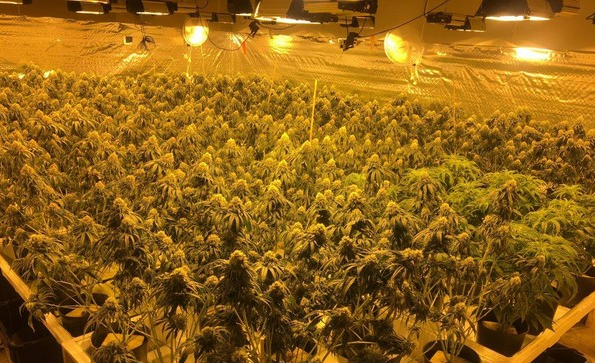
For licensed commercial cannabis cultivators, multi-tier extraction facility operators, and greenhouse agricultural engineers, achieving maximum market value requires complete control over plant secondary metabolites. Transitioning from traditional high-pressure sodium (HPS) fixtures to advanced controlled environment agriculture (CEA) layouts demands highly specialized technology. Deploying an industrial-grade LED grow light matrix represents the most powerful asset to accelerate target flowering cycles, boost dry weight per square foot, and maximize rich terpene profiles. However, when procurement directors and master growers audit manufacturing catalogs on top industrial portals like Fruitgrowlight, they realize that high-value medicinal crops cannot be cultivated with generic, single-channel illumination. To extract maximum genetic potential and premium compound concentrations, growers must implement an engineered, dynamic photobiological strategy adapted to every stage of plant development.
Historically, early-generation grow fixtures produced disappointing outcomes, often yielding loose, low-potency flower structures because they lacked precise spectral targeted delivery and sufficient Photosynthetically Active Radiation (PAR) penetration. Modern horticultural engineering has resolved these limitations through full-spectrum white matrices combined with deep-red, far-red, and supplemental ultraviolet channels. This comprehensive technical whitepaper breaks down the exact photobiology, hormonal triggers, and tailored nanometer metrics required to engineer a high-yield cultivation facility. By establishing a solid scientific foundation, this guide directly resolves the ultimate spectral question asked by scale-focused commercial cultivation directors globally: What is the best light spectrum for cannabis?
To capture Google Featured Snippets and deliver immediate technical precision for commercial cultivation applications, this section defines the ideal spectral benchmark. When establishing what is the best light spectrum for cannabis, the definitive scientific answer is the best overall option is a broad-spectrum, full-cycle white light profile ($3000\text{K} – 4000\text{K}$) supplemented with dedicated deep-red ($660\text{nm}$) diodes for biomass accumulation, far-red ($730\text{nm}$) wavelengths to optimize the Emerson enhancement effect during flowering, and targeted UVA ($380 – 400\text{nm}$) output to trigger intense trichome, THC, and CBD synthesis.
Cannabis is a highly photophilic crop that responds dynamically to changes in light quality. While old-school growers used separate Metal Halide (MH) bulbs for vegetative growth and High-Pressure Sodium (HPS) fixtures for flowering, modern solid-state LED grow light systems combine all necessary wavelengths into a single, high-efficiency unit. A true full-spectrum design provides a continuous band of light that mimics natural summer and autumn sunlight. This broad delivery ensures that plants develop strong, thick stems during the vegetative phase and produce dense, heavy, trichome-coated buds during the flowering cycle, all while keeping energy consumption low and eliminating the high heat generation of old bulb styles.
To maximize total yield weight and maintain tight node spacing in multi-tier vertical commercial racks, facility managers must understand how the plant’s photoreceptors absorb specific nanometer wavelengths:
Horticultural lighting science has advanced past the traditional 400–700nm PAR definition. Leading commercial cultivators now utilize the extended PAR (ePAR) spectrum, which expands the measurement window up to 750nm to include the powerful effects of far-red light.
Far-red light ($730\text{nm}$) alters the phytochrome photo-equilibrium ratio (Pr to Pfr), allowing growers to replicate natural sunset conditions. Applying far-red light at the end of the day cycle tricks the plant into falling asleep faster, effectively shortening the time required to trigger flowering. This hormonal control can shave days off the flowering cycle, allowing commercial farms to run more harvest cycles per year. Additionally, supplementing with Ultraviolet-A (UVA, $380 – 400\text{nm}$) light triggers a natural defense mechanism in cannabis plants. To protect itself from UV rays, the plant increases its production of resin and trichomes, significantly boosting the concentration of THC, CBD, and aromatic terpenes across the final harvest.
To guide vertical farm operators, master growers, and B2B horticultural purchasing directors in setting precise facility targets, the table below outlines the ideal spectral configurations and metrics across the entire growth cycle:
| Growth Stage | Target PPFD Range | Optimal Daily DLI | Photoperiod (Hours) | Recommended Spectrum Distribution |
|---|---|---|---|---|
| Seedling / Clones | $100 – 200\text{ }\mu\text{mol/m}^2/\text{s}$ | $6 – 12\text{ mol/m}^2/\text{day}$ | $18\text{ Hours}$ | Blue-Heavy ($450\text{nm}$) White; low red ratio to encourage strong, early root development. |
| Vegetative Stage | $400 – 600\text{ }\mu\text{mol/m}^2/\text{s}$ | $25 – 40\text{ mol/m}^2/\text{day}$ | $18\text{ Hours}$ | Balanced Full Spectrum ($4000\text{K}$) with $15\% – 20\%$ blue light to maintain tight node spacing. |
| Early Flowering (Wk 1-4) | $600 – 900\text{ }\mu\text{mol/m}^2/\text{s}$ | $30 – 40\text{ mol/m}^2/\text{day}$ | $12\text{ Hours}$ | Transition to $3000\text{K}$ base; supplement with $660\text{nm}$ deep-red to drive flower site induction. |
| Late Flowering (Wk 5-8+) | $900 – 1200+\text{ }\mu\text{mol/m}^2/\text{s}$ | $40 – 55\text{ mol/m}^2/\text{day}$ | $12\text{ Hours}$ | Heavy $660\text{nm}$ + $730\text{nm}$ far-red for maximum bud weight; add UVA to boost trichome density. |
| Flushing / Pre-Harvest | $500 – 700\text{ }\mu\text{mol/m}^2/\text{s}$ | $20 – 30\text{ mol/m}^2/\text{day}$ | $12\text{ Hours}$ | Reduce overall intensity; run dedicated UV/Far-Red channels to maximize final terpene profiling. |
Maintaining high cannabinoid consistency and maximizing flower yields across multi-tier vertical racks requires partnering with a trusted commercial manufacturer. Fruitgrowlight is an established global B2B manufacturing leader and professional OEM/ODM vendor with deep export experience, providing durable, high-efficiency LED grow light solutions to commercial cultivation complexes, greenhouse facilities, and international agricultural equipment suppliers around the world.
We build our commercial product lines using only premium, high-bin SMD diodes, heavy-duty IP65 waterproof aluminum frames, and reliable dimmable drivers. Our fully automated factory floors implement strict quality control protocols, putting every production batch through extreme temperature chamber testing, integrating sphere color validation, and long-term waterproof stress tests. This ensures your indoor cultivation infrastructure delivers uniform PAR distribution and exceptional reliability from the moment it is hung over the crop canopy.
When you partner with Fruitgrowlight as your long-term commercial OEM manufacturing supplier, you gain access to a comprehensive suite of professional business services:
We build our outdoor equipment to meet the world’s strictest regulatory and electrical safety standards. The vast majority of our commercial product lines carry official CE-EMC and LVD certifications. This compliance guarantees that our internal charge controllers emit zero electromagnetic interference to disrupt surrounding municipal networks or security sensors, while ensuring absolute electrical safety and weather-isolated grounding for total peace of mind in the field.