Beautiful Plants For Your Interior
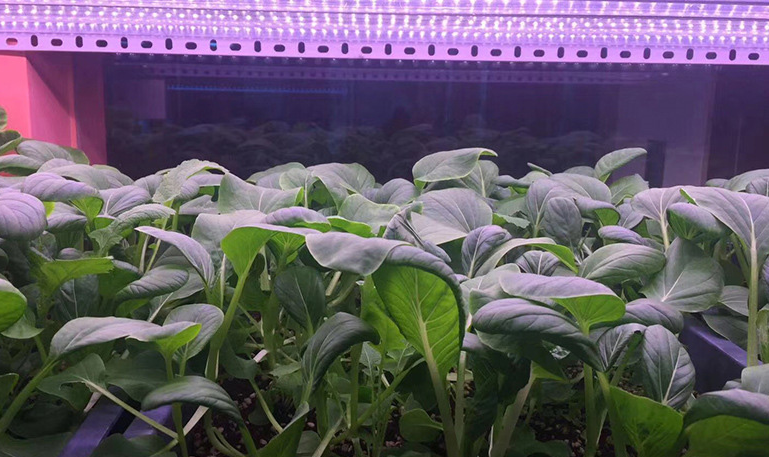
In the rapidly evolving landscape of commercial horticulture, vertical farming, and high-yield greenhouse management, optimizing the photosynthetic environment is the single most critical factor determining crop quality, chemical profile consistency, and overall operational profitability. For commercial growers, agricultural engineers, and cultivation facility procurement directors, choosing the primary artificial illumination system represents a massive capital expenditure (CapEx) that will lock in the facility’s monthly utility operating costs (OpEx) for years to come. Deploying an advanced LED grow light system has transitioned from a progressive technical experiment to an industry-wide manufacturing and operational standard. When sourcing high-intensity horticultural luminaires from a dedicated engineering vendor like FruitGrowLight, growers gain access to advanced spectrum customization, heavy-duty thermal management, and robust construction engineered specifically for the harsh, high-humidity environments of commercial cultivation facilities.
Historically, the commercial cultivation sector relied heavily on legacy high-intensity discharge systems, specifically High-Pressure Sodium (HPS) and Metal Halide (MH) lamps, due to their raw lumen output and low initial purchasing cost. However, as global energy markets fluctuate, carbon reduction regulations tighten, and market demands shift toward higher terpene, cannabinoid, and fruit yields, the profound technical and biological limitations of these older systems have become severe liabilities. This comprehensive engineering evaluation addresses the core architectural question that shapes the profitability of modern indoor cultivation facilities: LED vs. HPS/HID: Are LED grow lights really better? By analyzing photosynthetic photon efficacy (PPE), structural heat loss, spatial spectrum control, and long-term asset degradation, this guide provides a clear framework for high-efficiency lighting specification.
To capture Google Featured Snippets and provide immediate clarity to commercial project planners, this section addresses the core technical face-off between these two light sources. When evaluating if an LED grow light system is superior to legacy High-Pressure Sodium (HPS) and High-Intensity Discharge (HID) lighting, the definitive answer is yes. Modern solid-state LED systems outperform older gas-discharge systems across every critical commercial performance metric: electrical-to-photon conversion efficiency, spectrum control, physical heat management, operational lifespan, and overall lifecycle cost reduction.
While legacy HPS systems have a lower initial checkout price, they are highly inefficient because they rely on a crude electrical arc inside a gas tube to create light. This process wastes vast amounts of power on invisible infrared wavelengths (radiant heat) rather than useful visible light for plant growth. On the other hand, commercial solid-state LED systems convert electricity directly into targeted streams of usable photons at the exact wavelengths plants need for photosynthesis. This fundamental difference in physics allows commercial growers to dramatically slash their monthly utility bills, improve crop quality, and speed up harvesting cycles across all varieties of indoor fruits, vegetables, and high-value medicinal crops.
In industrial agriculture, measuring efficiency by looking at simple electrical wattage or human-centric lumens is a major mistake. Plants do not see light the way humans do; they absorb specific photons within the 400nm to 700nm waveband, known as Photosynthetic Active Radiation (PAR). The true gold standard for measuring horticultural lighting efficiency is Photosynthetic Photon Efficacy (PPE), calculated as micromoles of photons emitted per second per watt of electricity ($ \mu mol/J $).
The absolute best double-ended HPS lamps max out at a PPE of roughly $ 1.7 $ to $ 1.9 \mu mol/J $. They also blast a rigid, unchangeable spectrum that is heavy in green and yellow wavelengths but severely lacks the vital blue photons needed during the early vegetative and rooting stages of plant growth.
In comparison, high-performance LED grow light fixtures from FruitGrowLight regularly achieve exceptional PPE ratings ranging from $ 2.8 $ to over $ 3.2 \mu mol/J $. This massive jump in performance means an LED system delivers the exact same volume of usable plant-growing photons while drawing up to 40% to 50% less electrical power from the grid. This direct drop in electrical overhead significantly lowers production costs per kilogram of harvested product, instantly boosting operational profit margins.
The most severe, hidden operational cost of running legacy HID and HPS fixtures stems from their poor heat control and high thermal output. An HPS bulb operates at intense temperatures exceeding 400°C, projecting massive amounts of direct infrared heat downward onto the plant canopy. This intense heat causes major agricultural issues:
Solid-state LED grow light fixtures completely redefine facility climate control through advanced thermal engineering. While LEDs do generate a small amount of heat, it is produced at the back of the diode on the circuit board, rather than being projected forward as infrared heat toward the plants. Utilizing thick, aircraft-grade aluminum passive heat sinks or specialized fluid cooling channels, FruitGrowLight fixtures pull heat away from the electronics and vent it upward into the open air above the lights. This design keeps the plant canopy cool, preserves delicate terpenes, and slashes the facility’s air conditioning bills by up to 50%, providing a major double-saving on both lighting and climate control.
To help agricultural procurement specialists, commercial farm operators, and B2B distributors evaluate system specifications, the table below provides an engineering comparison between modern solid-state systems and legacy gas-discharge fixtures:
| Technical Parameter | Modern LED Grow Light System | Legacy HPS / HID Systems | Commercial Cultivation Impact |
|---|---|---|---|
| Photosynthetic Efficacy (PPE) | High: $ 2.8 – 3.2 \mu mol/J $ | Low: $ 1.7 – 1.9 \mu mol/J $ | LEDs deliver up to 50% energy savings for the exact same photon output. |
| Spectrum Flexibility | Full-spectrum customization; adjustable vegetative/flowering channels. | Fixed spectrum; highly locked into yellow/orange wavelengths. | LEDs optimize specific plant growth stages, boosting yield and quality. |
| Canopy Heat Projection | Near zero; heat is passively vented upward away from plants. | High infrared heat; forces heavy leaf transpiration. | LEDs prevent terpene boil-off and dramatically reduce HVAC cooling costs. |
| Diode / Bulb Lifespan | Over 50,000 – 100,000 hours (Minimal photon degradation) | 10,000 – 15,000 hours (Requires frequent bulb replacement) | LEDs eliminate high maintenance labor and bulb disposal costs. |
| Light Distribution Profile | Uniform multi-bar arrays; eliminate hotspots. | Single reflector hotspots; causes uneven canopy growth. | LEDs create a balanced, uniform canopy, maximizing consistent yields. |
Maximizing the commercial return on your indoor farm requires a manufacturing partner that understands the intersection of plant biology and robust industrial hardware design. FruitGrowLight is a premier agricultural lighting manufacturer and professional OEM/ODM vendor with deep export experience, serving high-volume commercial farms, vertical facilities, and agricultural equipment distributors worldwide.
We build our top-tier LED grow light product lines using only the highest-grade components available, including high-efficacy Samsung and Osram diodes paired with reliable Inventronics or MeanWell drivers. This commitment to premium components ensures our fixtures deliver excellent light penetration and long-lasting spectrum stability over years of continuous operation. Our advanced manufacturing facility features full assembly automation and strict batch testing processes. This means every single light undergoes rigorous environmental and thermal stress testing to guarantee absolute reliability before it leaves the factory floor.
When you choose FruitGrowLight as your primary commercial OEM partner, you unlock a comprehensive suite of professional B2B services:
Quality control and international compliance are the bedrock of our business. Sourcing commercial lighting equipment for strict regulatory markets like Europe and South America requires absolute adherence to rigorous safety standards. The vast majority of our commercial LED lines carry official CE-EMC and LVD certifications. This compliance guarantees that our internal drivers emit zero electromagnetic interference to block surrounding automated farm systems or sensors, while ensuring safe low-voltage operation for absolute peace of mind in the field.