
When installing LED grow lights on large farms, customers usually focus on lamp wattage, installation spacing, and supplemental lighting hours. In fact, the power supply and electrical distribution design are equally important.
Farms in different countries and regions may use different electrical systems. Among the farm projects we handle, the three-phase four-wire system (sistema trifásico de cuatro hilos) is a common power supply configuration.
Tadiran LED grow lights feature a wide operating voltage range of 85–265V, 50/60Hz. For farms using a three-phase four-wire system, the lamps are normally connected using three live wires and one neutral wire.
I. Why Does the Neutral Wire Matter?
A three-phase four-wire system consists of three live wires and one neutral wire. LED grow lights used on farms are typically single-phase loads and require both a live wire and a neutral wire to complete the power circuit.
Distributing lamps across the three phases helps balance the electrical load and maintain power system stability.
For large farms, a distribution box (caja de distribución eléctrica) is also needed to distribute and manage different lighting circuits. It can be equipped with circuit breakers to provide necessary protection for individual circuits.
II. The Neutral Wire Must Be Connected in a Three-Phase Four-Wire System
If a farm uses a three-phase four-wire system and the lamps are designed for live-to-neutral connection, the neutral wire must be properly connected. It must not be omitted or replaced by a connection between two live wires.
In many three-phase power systems, the voltage between two live wires is higher than the voltage between a live wire and the neutral wire. Incorrect wiring may expose the lamps to voltage beyond their rated operating range, potentially causing damage or safety hazards.
For large farms with hundreds or even thousands of grow lights, the power supply system, wiring method, and phase load distribution must be confirmed before installation.
III. Understanding the 85–265V Grow Light Voltage Range
Tadiran grow lights feature an operating voltage range of 85–265V, making them compatible with common grid voltage specifications in multiple countries and regions.
However, wide voltage compatibility does not mean that the lamps can be connected directly between any two live wires.
In many three-phase power systems, the voltage between two live wires is significantly higher than the voltage between a live wire and the neutral wire. Therefore, the actual site voltage and correct lamp wiring method must be confirmed before installation.
For farm projects in different countries, we recommend designing the system based on the site voltage, power supply configuration, lamp quantity, distribution box rated capacity, and cable layout.
IV. Grow Light Wiring for Large Farms
For supplemental lighting (iluminación suplementaria) projects involving pitaya (pitahaya), blueberries, and other commercial crops, electrical design is just as important as the grow lights themselves.
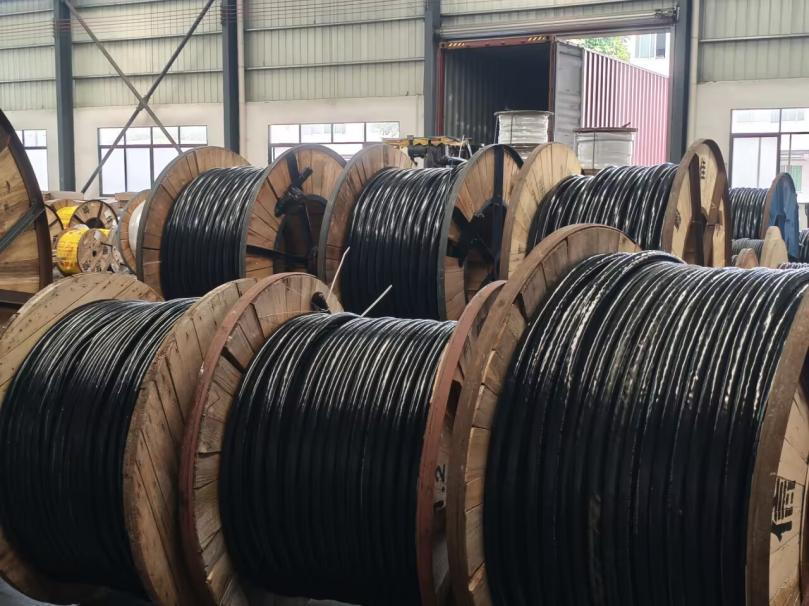
Tadiran supplies not only LED grow lights but also matching cables, lamp holders, and installation solutions. Take the TALZPU5 model as an example. These lamps are designed for long-term outdoor farm use and support independent cabling for each planting row, making installation and maintenance easier for large-scale farms.
For large lighting projects, selecting the right distribution box is equally important. The total power consumption of all connected lamps and other electrical equipment must remain within the rated capacity of the distribution box and its corresponding circuits. Overloading is strictly prohibited. Circuit breakers and branch circuits must also be properly selected according to the actual electrical load.
Our project experience covers China, Southeast Asia, and multiple Latin American countries. Since power requirements vary from country to country and from farm to farm, the appropriate connection method should be determined based on the actual conditions of each farm, including its voltage, power supply configuration, and farm size.
If you are planning a large-scale LED grow light system for your farm, we recommend confirming the local electrical system before installation. A qualified electrician should verify the wiring scheme, neutral wire connection, distribution box rated capacity, and circuit protection configuration to ensure long-term, safe, and stable operation.
FAQ
Q1: What voltage do Tadiran grow lights support?
A: Tadiran grow lights support 85–265V, 50/60Hz, suitable for power systems on many farms.
Q2: Do I need a neutral wire for a three-phase four-wire system?
A: Yes. If the farm uses a three-phase four-wire system, the neutral wire must be properly connected following the grow light wiring design.
Q3: How should grow lights be connected on a large farm?
A: For large commercial farms, check voltage, power supply type, lamp quantity, cable length and load distribution before installation. Tadiran can also assist in designing grow light and cable layouts tailored to farm conditions.