Beautiful Plants For Your Interior
Beautiful Plants For Your Interior
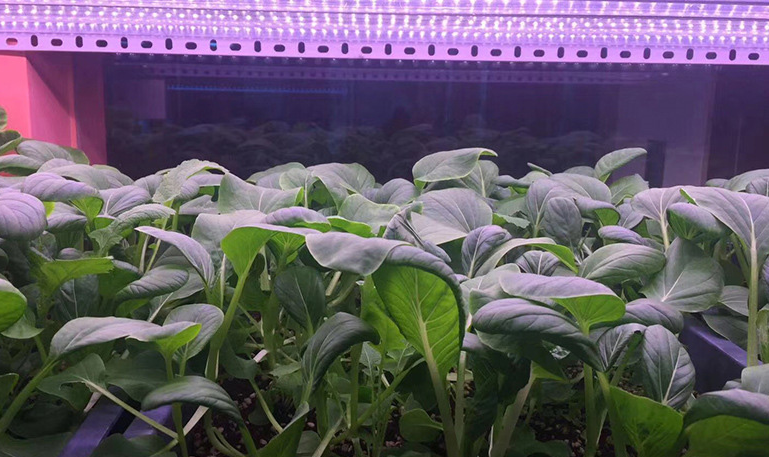
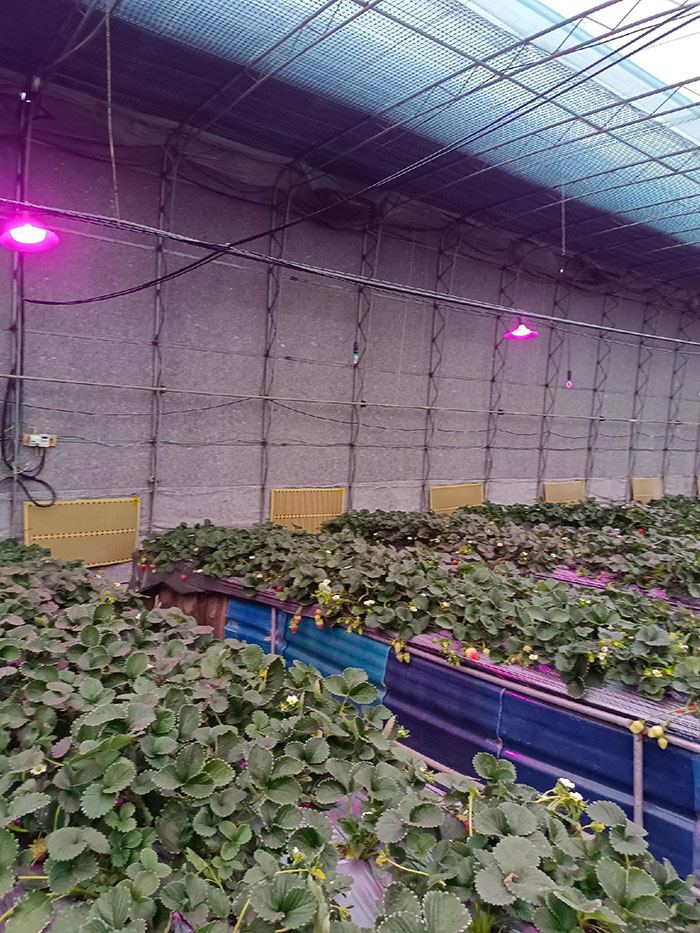
Analyzing an LED grow light vs HPS setup is the single most critical technical evaluation for commercial horticulture and vertical farming facility managers looking to optimize energy costs. Choosing primary artificial lighting represents a major CapEx investment that defines long-term utility operating expenses (OpEx). When sourcing high-intensity luminaires from specialized platforms like FruitGrowLight, growers gain access to advanced spectrum customization—including luz LED para fresas y frutillas (strawberry grow lights)—and heavy-duty thermal engineering designed to maximize yield quality and crop turnarounds.
Historically, commercial facilities relied on legacy High-Pressure Sodium (HPS) and Metal Halide (MH) lamps due to low purchasing costs. However, as global power prices rise, the technical limitations of gas-discharge bulbs become major financial liabilities. This guide directly answers: LED vs. HPS/HID: Are LED grow lights really better? By breaking down Photosynthetic Photon Efficacy (PPE), structural heat loss, and lifecycle ROI, we provide commercial buyers with a clear specification blueprint.
When assessing whether an LED grow light vs HPS system is truly superior for industrial greenhouses and indoor farms, the definitive answer is yes. Modern solid-state LED fixtures outperform older gas-discharge systems across every key performance metric: conversion efficiency, spectrum flexibility, thermal management, operational lifespan, and long-term lifecycle ROI.
While legacy HPS systems have a lower initial checkout price, they rely on a crude electrical arc inside a gas tube, wasting immense energy as invisible infrared heat rather than usable PAR photons. In contrast, commercial lámparas de cultivo LED convert electricity directly into targeted plant-absorbable wavelengths. This fundamental physics advantage allows growers to slash monthly utility bills, protect terpenes, and accelerate harvesting cycles across commercial fruits, vegetables, and high-value crops.
In industrial agriculture, human-centric lumen output is an outdated metric. Plants absorb photons within the 400nm to 700nm waveband (PAR). According to research on commercial plant physiology standards, the gold standard for measuring fixture efficiency is Photosynthetic Photon Efficacy (PPE), measured in micromoles per second per watt ($ \mu mol/J $).
Top-tier double-ended HPS lamps max out at a PPE of roughly $ 1.7 $ to $ 1.9 \mu mol/J $, outputting an unchangeable spectrum heavy in green/yellow light while lacking essential blue photons needed for early rooting. In comparison, high-efficacy LED grow light models from FruitGrowLight achieve PPE ratings from $ 2.8 $ to over $ 3.2 \mu mol/J $. This massive leap delivers identical or superior canopy light levels while drawing 40% to 50% less grid electricity, drastically reducing production cost per kilogram.
The most severe hidden operating expense of legacy HPS lamps stems from thermal radiation. An HPS bulb operates at temperatures exceeding 400°C, projecting direct infrared heat downward onto the crop canopy. This causes severe agricultural drawbacks:
Solid-state LED grow light systems redefine climate control. While LEDs produce heat at the back of the diode substrate, it is passively dissipated upward away from the crop using heavy-duty aluminum heat sinks. This keeps the plant canopy cool, preserves delicate terpenes, and lowers facility cooling expenses by up to 50%.
Below is an engineering performance matrix comparing modern solid-state systems against legacy gas-discharge fixtures:
| Technical Parameter | Modern LED Grow Light System | Legacy HPS / HID Systems | Commercial Cultivation Impact |
|---|---|---|---|
| Photosynthetic Efficacy (PPE) | High: $ 2.8 – 3.2 \mu mol/J $ | Low: $ 1.7 – 1.9 \mu mol/J $ | LEDs deliver up to 50% energy savings for identical photon output. |
| Spectrum Flexibility | Full-spectrum customization; adjustable vegetative/flowering channels. | Fixed spectrum; dominated by yellow/orange light. | LEDs optimize specific growth phases, boosting total yield quality. |
| Canopy Heat Projection | Near zero; heat is passively vented upward away from plants. | High infrared heat; forces excessive leaf transpiration. | LEDs protect terpenes and dramatically lower HVAC cooling expenses. |
| Diode / Bulb Lifespan | 50,000 – 100,000+ Hours (Minimal degradation) | 10,000 – 15,000 Hours (Requires frequent replacement) | LEDs eliminate frequent bulb purchases and replacement labor. |
| Light Distribution Profile | Uniform multi-bar arrays; eliminates hotspots. | Single reflector hotspots; causes uneven canopy growth. | LEDs build uniform canopies, maximizing harvest consistency. |
FruitGrowLight is a premier agricultural lighting manufacturer and B2B OEM/ODM supplier serving commercial farms, vertical facilities, and international distributors worldwide. We build our commercial LED series using high-efficacy Samsung and Osram diodes paired with Inventronics or MeanWell drivers, guaranteeing spectrum stability and deep canopy penetration.
When selecting FruitGrowLight as your OEM manufacturing partner, you receive complete B2B services:
Q1: Why is the higher upfront purchase cost of an LED grow light justified over HPS?
A: While an LED setup requires a higher initial CapEx, it typically pays for itself within 12 to 18 months through ongoing double-savings: 40%–50% reduced lighting electricity costs, lowered HVAC cooling load, and zero annual bulb replacement fees.
Q2: Can I directly replace 1000W HPS lights with LED fixtures on a 1:1 basis?
A: Yes, a 650W–680W premium LED bar fixture directly replaces a 1000W single-ended HPS, providing higher, more uniform PAR coverage while drawing substantially less power from the wall.
Q3: How do CE-EMC and LVD certifications protect commercial facilities?
A: CE-EMC certification ensures drivers emit zero electromagnetic noise to disrupt automated farm sensors or climate networks. LVD certification proves electrical pathways are insulated against moisture, preventing short circuits in high-humidity greenhouses.
Q4: What is the optimal hanging height for an LED bar light?
A: Multi-bar LED fixtures spread light uniformly and can be hung 12 to 24 inches above the canopy (depending on growth stage and target PPFD), enabling multi-tier vertical stacking.
Scan QR code to chat with our grow light specialist!