Beautiful Plants For Your Interior
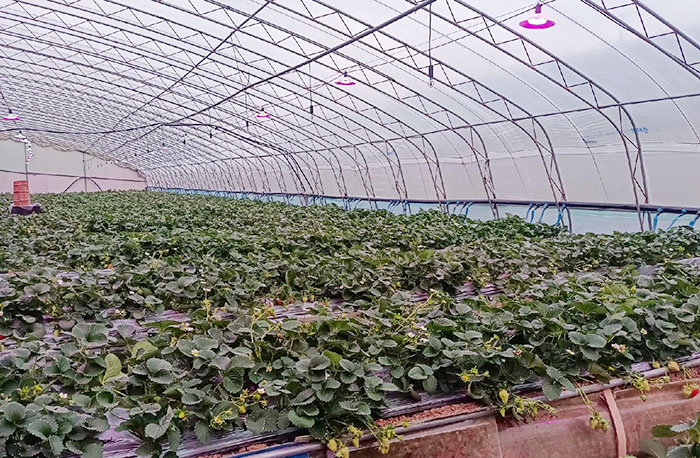
Determining the ideal LED grow light hours and photoperiod schedules is a fundamental requirement for modern commercial indoor farming and greenhouse management. Deploying an advanced commercial LED grow light grid involves substantial capital, making energy optimization critical. For agricultural distributors and farm managers evaluating sourcing options on platforms like FruitGrowLight, mastering run-time control—such as calculating optimal illumination for crops or configuring luz LED para fresas y frutillas (strawberry grow lights)—directly impacts yield quality, plant circadian rhythms, and monthly utility overhead.
Historically, legacy lamps like High-Pressure Sodium (HPS) offered limited dimming flexibility. Modern solid-state technology grants precision timing control down to the second. This technical evaluation directly addresses a key operational question: How many hours should I run LED grow lights? By breaking down Daily Light Integral (DLI), photoperiod matrixes, and smart energy scheduling, this guide provides commercial buyers with a clear operational strategy.
When calculating optimal LED grow light hours for commercial installations, standard operational run times typically range from 12 to 18 hours per day. The exact duration depends entirely on crop genetics, growth phase, and targeted Daily Light Integral (DLI) metrics.
For leafy greens, herbs, and vegetative development, a commercial LED grow light grid should run for 14 to 18 hours daily to maximize photosynthetic accumulation. For photoperiod-sensitive fruiting crops (including greenhouse strawberries or frutillas), schedules are managed across two stages: a vegetative phase of 18 hours ON / 6 hours OFF, followed by a flowering cycle of 12 hours ON / 12 hours OFF. This uninterrupted 12-hour dark window triggers hormonal shifts necessary for flower density and fruit expansion.
To optimize large-scale indoor farming, operators focus on Daily Light Integral (DLI), which measures total photosynthetic active photons delivered per square meter per day ($mol/m^2/day$). According to commercial agricultural research standards, DLI is defined by light intensity (PPFD) and total duration:
$$ \text{DLI} = \text{PPFD} \times \text{Run Time (Hours)} \times 3600 \times 10^{-6} $$
This equation offers significant energy management flexibility. Using dimmable lámparas de cultivo LED, facility managers can achieve target DLI by running fixtures at lower PPFD for longer hours or higher PPFD for shorter periods. Dimming lights during expensive peak utility hours and ramping intensity during off-peak night hours helps lower overall operational electricity costs.
Customized lighting duration prevents early flowering errors and reduces energy waste:
Below is an industrial reference guide for photoperiod metrics across major crop categories:
| Target Crop Category | Daily Run Time (Hours) | Optimal Photoperiod Cycle | Target DLI ($mol/m^2/day$) | Commercial Goal |
|---|---|---|---|---|
| Seedlings & Clones | 18 Hours | 18 Hours On / 6 Hours Off | $ 10 – 15 \text{ mol} $ | Establishes early root growth without light stress. |
| Vegetative Crops | 18 Hours | 18 Hours On / 6 Hours Off | $ 20 – 30 \text{ mol} $ | Builds leaf surface area and sturdy branching. |
| Photoperiod Flowering Crops | 12 Hours | 12 Hours On / 12 Hours Off | $ 30 – 45+ \text{ mol} $ | Triggers uniform flowering responses. |
| Greenhouse Lettuce | 16 – 18 Hours | Continuous Supplemental | $ 14 – 17 \text{ mol} $ | Prevents tip-burn while ensuring fast crop turnover. |
| Strawberries (Luz LED para Fresas) | 16 Hours | 16 Hours On / 8 Hours Off | $ 20 – 25 \text{ mol} $ | Optimizes sugar levels (Brix) and fruit expansion. |
FruitGrowLight specializes in OEM/ODM manufacturing of high-efficacy commercial LED grow light systems built for commercial greenhouses and vertical farms. Our luminaires integrate 0-10V / PWM control channels compatible with central greenhouse controllers, enabling sunrise/sunset dimming routines to reduce plant stress. Built with Samsung and Osram chips alongside MeanWell drivers, these fixtures ensure precise daily photoperiod delivery.
Our commercial services include:
Q1: What happens if commercial crops receive 24 hours of continuous LED light?
A: Most commercial crops require a dark period for respiration, circadian rhythm resetting, and carbohydrate translocation. Continuous 24-hour lighting can induce leaf chlorosis, severe stress, and unneeded energy consumption.
Q2: Why is an uninterrupted 12-hour dark window essential for photoperiod crops?
A: Photoperiod-sensitive plants rely on phytochrome proteins to measure darkness. Light interruptions during dark cycles reset these proteins, potentially delaying flowering or triggering vegetative reversion.
Q3: How does DLI tracking lower commercial electricity bills?
A: By balancing intensity with duration. Dimmable LED fixtures can run at reduced power during peak utility rates and increase output during off-peak hours while meeting target DLI requirements.
Q4: Are heavy-duty external contactors required for LED grow lights?
A: Modern industrial LED fixtures from FruitGrowLight include soft-start internal drivers that minimize inrush current, allowing direct integration with digital timers or control networks.
Scan QR code to chat with our grow light specialist!