Beautiful Plants For Your Interior
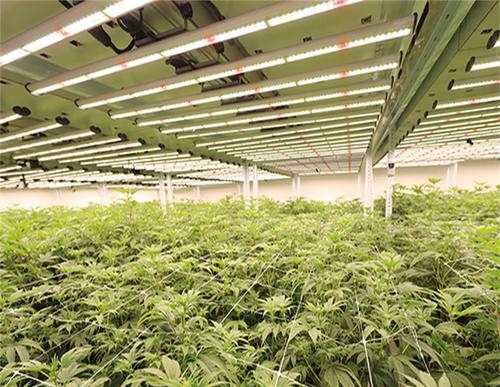
As a general rule, LED grow lights should be placed 12 to 36 inches away from your plants. The exact height depends heavily on your plant’s growth stage and light wattage: Seedlings require 24 to 36 inches; vegetative growth needs 18 to 24 inches; and flowering or fruiting plants thrive with lights placed closer at 12 to 18 inches (distancia de luces LED para cultivar). Always monitor your canopy for light burn or stretching.
Transitioning to indoor gardening using an enclosed grow tent or a dedicated vertical farming system offers incredible control over environmental factors. At Fruit Grow Light, we design high-efficiency lighting solutions to help growers balance energy output and crop yields. However, one of the most critical parameters indoor growers miscalculate is the physical hanging height between the LED grow lights and the plant canopy.
Unlike traditional High-Pressure Sodium (HPS) or fluorescent fixtures, modern Light Emitting Diodes (LEDs) emit highly concentrated photon streams. Placing your fixtures too close causes localized thermal stress and photo-bleaching. Conversely, hanging fixtures too far away results in weak, “leggy” seedlings and diminished photosynthetic activity. Achieving the perfect equilibrium ensures optimal photosynthetic photon flux density (PPFD) without stressing your crops, whether you grow succulents, vegetables, or commercial fruit crops.
To maximize efficiency, use this reference chart outlining recommended hanging heights based on both the growth stage and true core wattage. This chart also serves as a guide for growers searching for distancia de luces LED para plantas across different setups.
| Fixture True Wattage | Seedling Stage Distance (Inches / cm) | Vegetative Stage Distance (Inches / cm) | Flowering/Fruiting Distance (Inches / cm) |
|---|---|---|---|
| Low Power (50W – 100W) | 20″ – 26″ (50–65 cm) | 14″ – 18″ (35–45 cm) | 10″ – 14″ (25–35 cm) |
| Medium Power (150W – 300W) | 24″ – 30″ (60–75 cm) | 18″ – 24″ (45–60 cm) | 14″ – 18″ (35–45 cm) |
| High Power (400W – 600W) | 30″ – 36″ (75–90 cm) | 24″ – 30″ (60–75 cm) | 16″ – 20″ (40–50 cm) |
| Commercial Grade (650W – 1000W+) | 36″ – 42″ (90–105 cm) | 30″ – 36″ (75–90 cm) | 18″ – 24″ (45–60 cm) |
Note: This chart assumes full-spectrum LED fixtures without specialized magnifying lenses. Always consult PPFD footprint maps when setting up high-intensity commercial arrays.
Plants are biological engines whose light appetites change dynamically as they age. Understanding these shifts prevents stunted growth and guarantees maximum biomass accumulation.
During the initial phase, seedlings possess fragile root systems. Their focus is establishing root architecture rather than processing high-intensity photons. Hanging a high-powered light array too close causes rapid moisture loss through transpiration, drying out cotyledons.
Keep your lights at 24 to 36 inches. This provides gentle illumination that encourages early chlorophyll production without stressing delicate tissue.

As crops enter the vegetative phase, their appetite for light increases exponentially. This is when indoor plants build structural foundations—thickening stems, expanding leaves, and preparing nodes for future budding. Lower your LED fixtures to 18–24 inches to promote tight internodal spacing and bushy canopy growth.
The generative flowering phase represents peak energy demand. Whether growing fruit crops or indoor flowers, plants require high photon density to synthesize sugars. Move your lights to their closest safe distance (12 to 18 inches). The concentrated energy fuels dense flower formations and robust fruit sets.
Advanced horticulturists rely on scientific metrics rather than physical distance alone. LED efficiency varies by brand, meaning a high-efficiency 200W fixture can deliver double the usable light of a lower-grade alternative at the exact same height.
| Plant Type / Lifecycle Stage | Target PPFD Range (μmol/m²/s) | Optimal Hanging Approach |
|---|---|---|
| Seedlings & Rooted Clones | 100 – 300 | Hang high, maximize light diffusion across trays |
| Low-Light Houseplants & Succulents | 200 – 450 | Moderate height, maintain balanced ambient spread |
| Vegetative Crops & Leafy Greens | 400 – 600 | Lower fixture to encourage lateral branching |
| High-Yield Flowering Crops (No CO²) | 600 – 900 | Maximum close proximity without heat stress |
| Commercial Cultivation (With CO² Enrichment) | 1000 – 1500+ | Ultra-close or high-power industrial LED arrays |
Even with a distance chart, variations in room temperature and airflow affect plants. Learning to recognize early signs of light distress helps protect canopy health (iluminación para cultivos de interior).

While LEDs run cooler than older HPS lamps, drivers still generate radiant heat. Place your bare hand palm down at the top of the canopy for 30 seconds. If it feels uncomfortably warm, the light is too close and must be raised.
Avoid lowering lights from 36 inches to 12 inches overnight. Sudden increases in photon density induce plant shock. Adjust hanging systems by 1 to 2 inches per day to allow leaf tissues to acclimate.
Fast-growing plants can stretch up to 2 inches per day during early flowering. Leaving lights unattended at tight margins can result in plants growing directly into LED diodes, causing canopy damage.
Finding the ideal height for your LED grow lights requires balancing PPFD measurements with active canopy observation. By starting with this distance guide, monitoring for light stress, and adapting as your plants develop, you can maximize crop productivity. For tailored lighting solutions or custom greenhouse recommendations, feel free to visit our About Us page to get in touch with our engineering team.
Scan QR code to chat with our grow light specialist!