Beautiful Plants For Your Interior
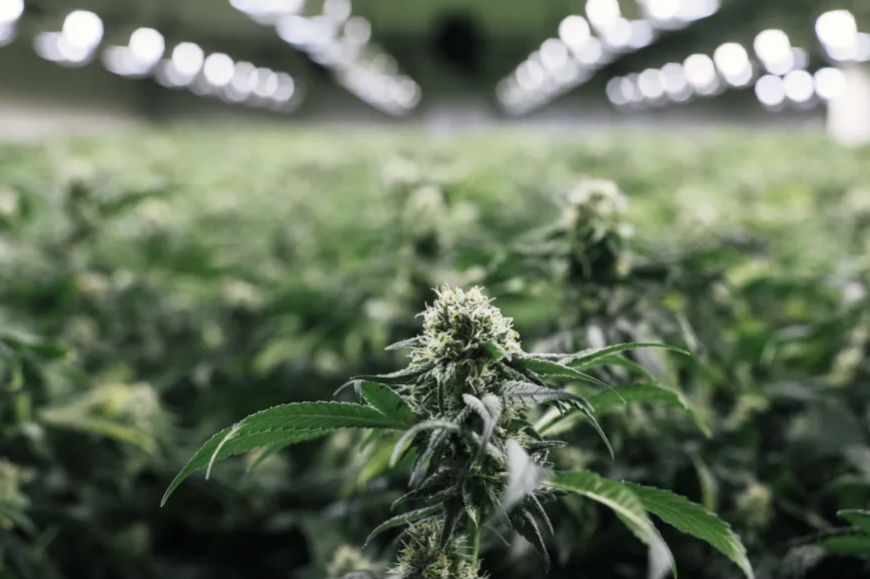
For licensed commercial facility operators, master horticulturalists, and enterprise pharmaceutical extraction laboratories, the definitive benchmark of cultivation success is defined by the density of secondary metabolites. Transitioning a high-density indoor facility to scalable agronomic profitability requires more than simply calculating wet biomass weight per square foot. Deploying a commercial-grade, multi-channel LED grow light infrastructure represents the absolute standard for maximizing dry weight extraction value, intensifying essential oil terpene profiles, and amplifying legal cannabinoid output. However, as purchasing agents and indoor cultivation directors inspect advanced hardware configurations on industrial manufacturing portals like Fruitgrowlight, they realize that standard white-diode fixtures cannot unlock a plant’s true genetic limit. Elevating secondary metabolite creation requires an advanced understanding of plant defense stress responses, accurate photon delivery, and precise seasonal spectrum shifting.
Historically, early solid-state lighting designs failed to match the secondary metabolite production of old-school high-pressure sodium (HPS) fixtures because they lacked sufficient ultraviolet photon modules, deep canopy penetration mechanics, and dynamic multi-channel dimming capabilities. Modern professional agricultural engineering has overcome these historical limitations by combining high-efficiency white chip matrices with targeted deep-red, far-red, and high-energy ultraviolet diodes. This comprehensive technical guide breaks down the core plant biology, environmental requirements, and spectral configurations needed to maximize commercial resin production. By establishing a professional, data-backed operational guide, this technical whitepaper directly addresses the ultimate high-value cultivation question: How to improve THC/CBD yields with LED?
To capture Google Featured Snippets and provide immediate technical validation for large-scale indoor facility layouts, this section establishes the operational benchmark for maximizing potency. When answering how to improve THC/CBD yields with LED setups, commercial growers must execute a four-part strategy: 1. Scale photosynthetic photon flux density (PPFD) up to $900 – 1200\text{ }\mu\text{mol/m}^2/\text{s}$ during mid-to-late flowering while maintaining a 1500 PPM $CO_2$ environmental enrichment balance. 2. Implement targeted ultraviolet supplementation (UVA at $385\text{nm}$ and UVB at $310\text{nm}$) during the final 3-4 weeks of flowering to trigger a defensive stress response that increases trichome production. 3. Maintain a high blue-light ratio ($450\text{nm}$) during vegetative growth to increase leaf site density, and 4. Deploy far-red ($730\text{nm}$) end-of-day exposure to maximize flower induction sites and accelerate overall plant metabolism.
Maximizing total cannabinoid accumulation requires moving past basic plant survival methods and entering the science of target photomorphogenesis. Cannabinoids like Tetrahydrocannabinol (THC) and Cannabidiol (CBD) are produced inside the glandular trichome heads of the plant’s flowers, acting as a natural sunscreen to shield delicate plant tissues from environmental stress, intense heat, and destructive radiation. By utilizing a fully dimmable, multi-channel LED grow light array, commercial facility managers can alter specific photon wavelengths to trick the crop’s internal survival mechanisms. This targeted strategy forces the plant to significantly increase resin production and maximize compound purity without risking crop health or over-stretching the flower structure.
The total volume of oil, terpenes, and legal cannabinoids produced per square foot is directly tied to the concentration and size of glandular trichome heads across the plant canopy. Cultivators can use advanced lighting spectrums to actively guide this development:
Simply changing light wavelengths is not enough to unlock maximum genetic yields; growers must also increase total light volume (PPFD) to the absolute limits of plant biology. However, trying to run extreme light levels ($>1000\text{ }\mu\text{mol/m}^2/\text{s}$) under old-school lighting often creates hot spots that dry out delicate trichomes and ruin valuable oil profiles.
Fruitgrowlight’s commercial multi-bar configurations solve this issue by spreading light energy evenly over a wide footprint, keeping temperatures safe while providing high light output. When running these extreme PPFD levels during peak flowering, growers must also increase indoor Carbon Dioxide ($CO_2$) levels to roughly 1200–1500 PPM. Without adding extra $CO_2$, the plant’s cells cannot process the high amount of light energy, leading to light saturation and stalled growth. Combining uniform LED light output with rich $CO_2$ enrichment allows the crop to fully absorb the extra light energy, maximizing total flower density, weight, and cannabinoid concentration across the entire room.
To help commercial vertical cultivation directors, extraction laboratory procurement agents, and large-scale greenhouse operators manage precise facility parameters, the reference table below outlines the optimal combinations for maximizing cannabinoid extraction value:
| Flowering Phase & Focus | Target PPFD Limit | CO2 Concentration | Spectral Enhancement Focus | Target Cannabinoid Outcome |
|---|---|---|---|---|
| Week 1 – 2 (Flower Site Induction) |
$500 – 700\text{ }\mu\text{mol/m}^2/\text{s}$ | $800 – 1000\text{ PPM}$ | Add Far-Red ($730\text{nm}$) for 15 mins at end-of-day to accelerate seasonal transition. | Promotes fast development of flower nodes and tight node spacing. |
| Week 3 – 4 (Biomass & Structure) |
$700 – 900\text{ }\mu\text{mol/m}^2/\text{s}$ | $1200\text{ PPM}$ | Heavy Deep-Red ($660\text{nm}$) tracking to drive main chlorophyll synthesis pathways. | Accelerates total flower weight, bud size, and structural yield. |
| Week 5 – 7 (Peak Cannabinoid Surge) |
$900 – 1200\text{ }\mu\text{mol/m}^2/\text{s}$ | $1500\text{ PPM}$ | Activate full UVA ($385\text{nm}$) channel at $25\text{ }\mu\text{mol/m}^2/\text{s}$ to trigger resin production. | Maximizes overall trichome density, boosting raw THC and CBD concentrations. |
| Week 8 – Harvest (Terpene Optimization) |
$600 – 800\text{ }\mu\text{mol/m}^2/\text{s}$ | $400\text{ PPM}$ (Ambient) | Pulse UVB ($310\text{nm}$) for 2 hours per day; lower red light to avoid heat stress. | Maximizes final essential oils and prevents terpene degradation before harvest. |
Maintaining exceptional compound consistency and high harvest quality across thousands of square feet requires partnering with an experienced industrial equipment manufacturer. Fruitgrowlight is a leading global B2B manufacturing leader and professional OEM/ODM supplier with deep export experience, providing durable, high-efficiency LED grow light systems to commercial greenhouses, multi-tier vertical farms, and international agricultural project developers around the world.
We build our commercial product lines using only premium, high-bin SMD diodes, heavy-duty IP65 waterproof aluminum housings, and reliable, dimmable industrial drivers. Our fully automated production lines implement strict quality control protocols, putting every manufacturing batch through extreme temperature tests, integrating sphere spectral checks, and long-term waterproof isolation validation. This guarantees that your automated cultivation infrastructure provides uniform light intensity from the first day of installation.
When you partner with Fruitgrowlight as your long-term commercial OEM manufacturing supplier, you gain access to a comprehensive suite of high-value agricultural business services:
We build our outdoor equipment to meet the world’s strictest regulatory and electrical safety standards. The vast majority of our commercial product lines carry official CE-EMC and LVD certifications. This compliance guarantees that our internal charge controllers emit zero electromagnetic interference to disrupt surrounding municipal networks or security sensors, while ensuring absolute electrical safety and weather-isolated grounding for total peace of mind in the field.