Beautiful Plants For Your Interior
Beautiful Plants For Your Interior

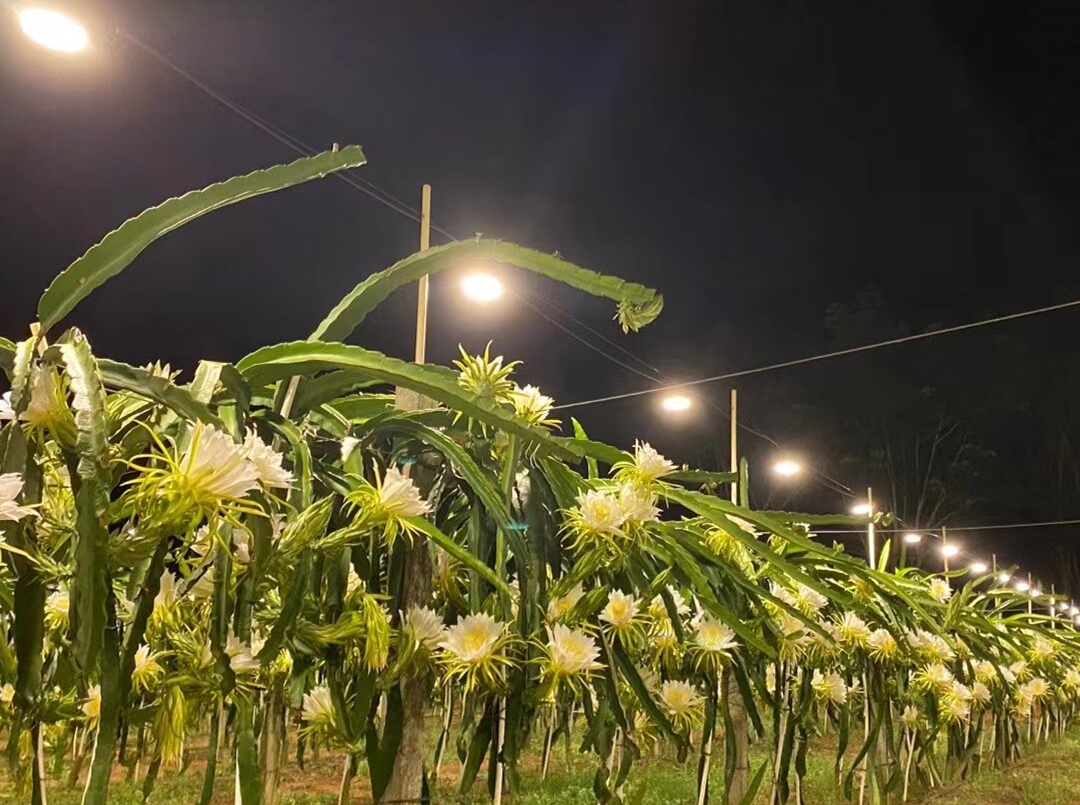
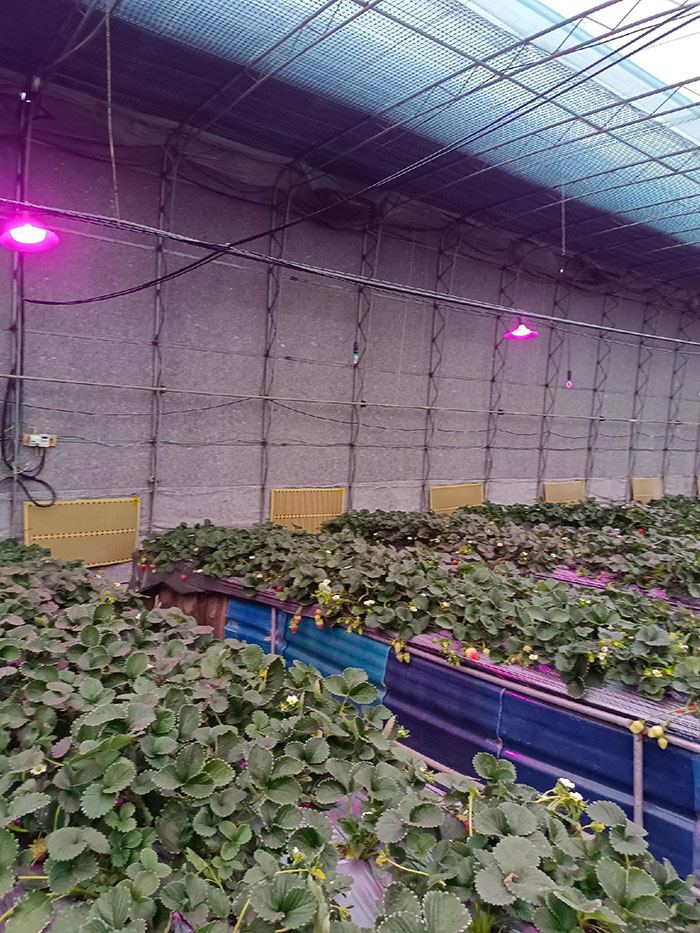
As a standard horticultural rule, you need 30 to 40 watts of actual (true wall draw) LED power per square foot of growing space for high-light flowering crops (e.g., tomatoes, peppers). For low-light leafy vegetables, herbs, and succulents, 20 to 25 watts per square foot is optimal. For example, a standard 2’x2′ grow tent (4 sq ft) requires a 100W–150W true LED light, while a larger 4’x4′ grow tent (16 sq ft) requires a 450W–600W true LED light array. Never rely on misleading “equivalent” marketing advertisements; always calculate using actual power consumption.
One of the most confusing hurdles for indoor growers setting up a new grow tent or dedicated cultivation facility is sizing their lighting infrastructure. In the old days of indoor farming, selecting a fixture was simple: if you had a medium space, you bought a 600-watt High-Pressure Sodium (HPS) bulb; if you had a massive commercial warehouse, you lined up row after row of 1000-watt double-ended HID fixtures. The relationship between electrical power draw and light output was predictable and linear.
The explosion of modern multi-bar and quantum-board LED grow lights has completely revolutionized indoor agricultural efficiency, but it has also fractured the traditional understanding of calculating how many watts of LED grow light you actually need. Because LEDs convert electricity into usable photons far more efficiently than older gas-discharge bulbs, a direct one-to-one wattage comparison is no longer accurate. This extensive guide cuts through marketing claims, debunks equivalent wattage myths, and provides math-driven calculation tables to determine exact power requirements. To learn more about our engineering standards and OEM capabilities, visit our About Us page[cite: 1].
To make setting up your indoor ecosystem seamless, use this comprehensive conversion matrix. It cross-references standard grow tent dimensions against actual wall-draw wattage requirements for vegetative crops, high-demand flowering species, and commercial strawberry systems (luz LED para fresas):
| Grow Tent Size (Feet) | Total Square Footage | Vegetables & Succulents (20W–25W / sq ft) | Flowering & Fruiting Crops (32W–40W / sq ft) |
|---|---|---|---|
| 2′ x 2′ Tent | 4 sq ft | 80W – 100W Actual Draw | 120W – 160W Actual Draw |
| 2′ x 4′ Tent | 8 sq ft | 160W – 200W Actual Draw | 250W – 320W Actual Draw |
| 3′ x 3′ Tent | 9 sq ft | 180W – 225W Actual Draw | 300W – 360W Actual Draw |
| 4′ x 4′ Tent | 16 sq ft | 320W – 400W Actual Draw | 500W – 640W Actual Draw |
| 5′ x 5′ Tent | 25 sq ft | 500W – 625W Actual Draw | 800W – 1000W Actual Draw |
| 8′ x 8′ Commercial | 64 sq ft | 1280W – 1600W Actual Draw | 2000W – 2500W Actual Draw |
Crucial Rule: Ensure that the values you use for your calculations represent the “Actual Power Draw” or “True Wall Draw” of the device, which is the physical electricity the unit pulls from your home’s electrical sockets, rather than the deceptive labels printed on budget retail boxes.
If you search online marketplaces for affordable lámparas de cultivo LED, you will routinely find tiny, lightweight fixtures labeled as “1000W LED Grow Light” or “2000W Full Spectrum Panel” selling for a fraction of what professional commercial systems cost. This is the single biggest trap in modern indoor cultivation equipment.
When an import brand labels a small light as 1000W, they are usually adding together the maximum theoretical threshold of the individual LED chips. For example, if a panel contains 100 individual LED chips made by a manufacturer, and each chip has a structural limit of 10 watts, the marketing department multiplies 100 by 10 to claim it is a “1000W fixture.”
However, if you actually ran those delicate diodes at their absolute thermal max, they would overheat and melt within minutes. In reality, the internal LED driver down-regulates the power, driving those chips at only a fraction of their capacity. If you plug that exact “1000W light” into a consumer energy monitoring device (like a Kill-A-Watt meter), you will find it pulls only 120 to 150 watts from your wall. That 150W is your true wattage, and that is the only number you can use when planning your crop coverage arrays.
When evaluating fixtures online, ignore the primary bold product title. Instead, scroll down into the technical specifications sheet and hunt for the phrases: “Actual Draw,” “Power Consumption,” “Wall Draw,” or “True Power Consumption.” If a manufacturer refuses to explicitly disclose this number, avoid the fixture entirely.
For growers transitioning from traditional High-Intensity Discharge (HID) setups over to modern commercial LED arrays, understanding the efficiency curve allows you to slash your electricity costs while maintaining—or vastly exceeding—your historical crop yields.
Old-school HPS lamps lose massive quantities of energy through radiant heat emissions. LEDs convert a much higher percentage of incoming electrons directly into usable Photosynthetically Active Radiation (PAR)[cite: 1]. As a baseline standard for facility upgrades, high-efficiency modern LED arrays replace HPS lamps using roughly 30% to 40% less electrical power.
| Legacy HID / HPS Bulbs | Required Coverage Footprint | High-Efficiency LED Equivalent (True Draw) | Average Power Savings Percentage |
|---|---|---|---|
| 250W HPS | 2′ x 2′ Space | 80W – 100W LED | 60% Savings |
| 400W HPS | 3′ x 3′ Space | 200W – 250W LED | 45% Savings |
| 600W HPS | 4′ x 4′ (Veg) / 3′ x 3′ (Flower) | 320W – 400W LED | 35% Savings |
| 1000W SE HPS | 4′ x 4′ Space | 600W – 680W LED | 35% Savings |
| 1000W DE HPS (Commercial) | 5′ x 5′ Space | 680W – 800W Premium LED | 25% Savings |
Not all indoor plants share the same metabolic limits. Sizing a 600-watt true-draw LED for an enclosure filled exclusively with low-light house crops will waste substantial money on energy bills and can physically stress plant cells.
During initial vegetative breakout, seedlings need minimal photon pressure[cite: 1]. Their small leaves cannot process heavy radiation[cite: 1]. Similarly, many varieties of succulents and small tropical houseplants thrive on lower continuous exposure profiles. For these setups, your target should remain around 15 to 25 watts per square foot.
Crops such as romaine lettuce, bok choy, spinach, basil, and culinary herbs fall squarely into the moderate light bracket. To maximize leaf growth and prevent long, weak stems, you need a solid 25 to 30 watts per square foot. This provides enough energy to drive lateral node creation across dense vegetable matrices.
If your ultimate objective is maximizing fruit weight, inducing dense flower buds, or maximizing sugar profiles (Brix) in crops like tomatoes, peppers, or commercial strawberries (luz LED para fresas), you are dealing with high-demand cultivars[cite: 1]. These crops require a significant 35 to 45+ watts per square foot of true wall draw. According to university agricultural studies, failing to meet these power density metrics results in shade starvation and loose yield structure.
Wattage measures how much electrical energy a fixture consumes, not how much usable light it actually produces. Two separate 300W LED fixtures can deliver wildly different crop results based on the efficiency of their internal drivers and diodes.
To identify top-performing fixtures, look past wattage and evaluate Photosynthetic Photon Efficacy (PPE), expressed as micromoles per joule ($\mu mol/J$):
$$ \text{PPE} = \frac{\text{Photosynthetic Photons Output }(\mu mol/s)}{\text{Electrical Power Consumed }(\text{Watts})} $$
Calculating the required watts of LED grow light for your indoor cultivation space relies on verifiable data. By focusing exclusively on true wall-draw metrics, calculating total square footage, and matching power density to crop demands, you eliminate investment risk. Choose components with high PPE ratings, follow square-foot metrics, and build an indoor farm optimized for peak performance and minimal operating costs.
Upgrade your facility with custom OEM/ODM LED grow lights engineered for maximum PPE efficiency. FruitGrowLight provides complete photometric Dialux mapping, factory-direct pricing, and custom spectrum configurations for commercial installations worldwide[cite: 1].
>
Scan QR code to chat with our grow light specialist!