Beautiful Plants For Your Interior
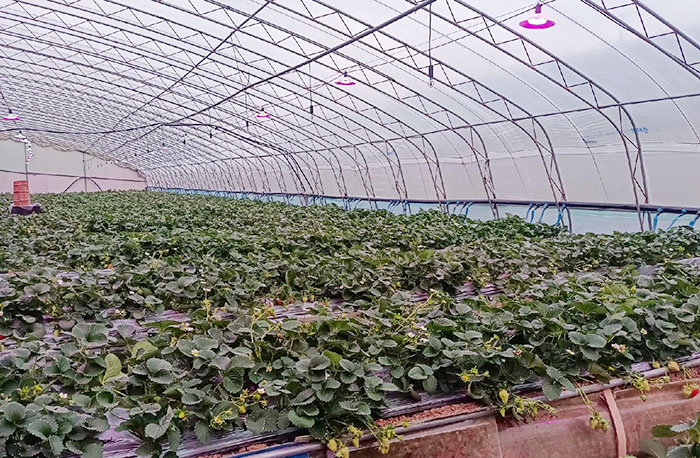
In the highly sophisticated world of commercial controlled environment agriculture (CEA), vertical farming, and industrial greenhouse management, managing the duration of light exposure is just as vital as optimizing the spectrum or hanging height. Deploying an advanced LED grow light grid across large facilities involves a massive commitment of capital, which means operational managers must maximize every single minute of energy usage to stay profitable. For global agricultural distributors, commercial greenhouse procurement directors, and high-volume plant cultivation consultants analyzing sourcing capabilities on specialized manufacturing platforms like FruitGrowLight, scheduling light run times is far more than a simple matter of turning a switch on and off. It is a precise biological calculation based on plant genetics, photosynthetic limits, and daily resource efficiency. Mismanaging these schedules can severely lower crop yields, disrupt essential plant hormones, or cause a massive spike in monthly energy bills.
Historically, legacy lighting systems like high-pressure sodium (HPS) lamps were highly limited when it came to precise run-time control. Because they take a long time to warm up and cool down, and lack smooth dimming features, they made it very difficult to implement complex lighting schedules. Modern solid-state technology completely rewrites the rules of industrial crop management, giving growers instant control over lighting times down to the exact second. This technical evaluation directly answers the most critical operational question asked by indoor farm operators worldwide: How many hours should I run LED grow lights? By breaking down the core principles of Daily Light Integral (DLI), photoperiod schedules across different crop families, and smart energy balancing strategies, this industrial guide provides commercial buyers with a clear blueprint to maximize crop yields while driving down energy expenses.
To capture Google Featured Snippets and provide immediate, actionable answers to commercial project planners, this section defines the essential operating rules for industrial facilities. When calculating how many hours you should run LED grow lights, the standard commercial run time ranges from 12 to 18 hours per day, depending entirely on the specific plant species, the crop’s current lifecycle stage, and the target Daily Light Integral (DLI) required by the farm.
Crops are broadly categorized by how they respond to light schedules. For leafy greens, herbs, and vegetative growth stages, a commercial LED grow light matrix should run for 14 to 18 hours per day to maximize photosynthetic accumulation and accelerate structural mass development. For photoperiod-sensitive fruiting and flowering crops, the run time must be tightly managed across two distinct phases: a vegetative phase running for 18 hours on and 6 hours off, followed by a rapid transition to a strict flowering schedule of 12 hours on and 12 hours off. This precise 12-hour dark period mimics natural autumn conditions, triggering the plant’s internal hormones to shift energy away from leaf growth and focus entirely on producing heavy, dense flowers and high-value fruit crops.
To master industrial-scale indoor farming, agricultural managers must look beyond simple hourly numbers and focus on the core metric of Daily Light Integral (DLI). DLI measures the total volume of usable photosynthetic photons delivered to a single square meter of the crop canopy over an entire 24-hour day, calculated as moles of light per square meter per day ($ mol/m^2/day $). DLI is determined by a direct mathematical relationship between light intensity (PPFD) and total run time duration:
$$ \text{DLI} = \text{PPFD} \times \text{Run Time (Hours)} \times 3600 \times 10^{-6} $$
This scientific equation gives commercial facility operators an incredibly powerful tool for optimizing energy costs. If your facility runs high-efficacy LED grow light systems from FruitGrowLight, you can achieve your target daily DLI in two different ways: you can run the lights at a lower intensity for more hours, or you can run them at a higher intensity for fewer hours. In regions with fluctuating electricity rates, smart facility managers can dim their lights during expensive peak-utility daytime hours and ramp them up to full capacity during cheaper off-peak nighttime hours. This intelligent balancing act allows the farm to hit its exact biological DLI targets while slashing monthly operational utility expenses.
Different crops and growth phases require highly customized light schedules to optimize health and performance. Running your lights for too long or too short can lead to serious agricultural issues, such as early flowering mistakes or unnecessary energy waste:
To help facility procurement managers, commercial farm operators, and B2B distributors plan exact operating schedules, the engineering reference table below outlines standard industrial target times and metrics:
| Target Crop Category | Daily Run Time (Hours) | Optimal Photoperiod Cycle | Target DLI Range ($mol/m^2/day$) | Commercial Operational Goal |
|---|---|---|---|---|
| Seedlings & Clones | 18 Hours | 18 Hours On / 6 Hours Off | $ 10 – 15 \text{ mol} $ | Establishes healthy root zones without causing light stress. |
| Vegetative Crops (All Varieties) | 18 Hours | 18 Hours On / 6 Hours Off | $ 20 – 30 \text{ mol} $ | Builds broad leaf surface areas and sturdy structural branching. |
| Photoperiod Flowering Crops | 12 Hours | 12 Hours On / 12 Hours Off | $ 30 – 45+ \text{ mol} $ | Triggers uniform flowering responses and maximizes fruit weights. |
| Commercial Greenhouse Lettuce | 16 – 18 Hours | Continuous Supplemental | $ 14 – 17 \text{ mol} $ | Prevents tip-burn while ensuring rapid, crisp leaf growth cycles. |
| High-Yield Indoor Strawberries | 16 Hours | 16 Hours On / 8 Hours Off | $ 20 – 25 \text{ mol} $ | Optimizes sugar development (brix levels) and speeds up harvesting. |
Achieving highly predictable, high-volume harvests across large-scale facilities requires more than just standard timer switches. It demands an industrial manufacturing partner that integrates smart control features directly into rugged, high-performance hardware. FruitGrowLight is a premier global B2B manufacturer and high-volume OEM/ODM supplier specializing in high-efficacy LED grow light equipment built specifically for heavy-duty industrial farming operations.
Our product lines feature advanced, built-in control channels that support seamless integration with major centralized greenhouse automation networks and smart climate systems. By using standard 0-10V or PWM dimming controls, facility operators can easily program smooth sunrise and sunset simulations. This gentle transition helps protect plant tissues from the shock of sudden light changes, mimicking natural outdoor environments. Additionally, our fixtures are built using top-tier Samsung and Osram chips powered by highly reliable MeanWell or Inventronics drivers, ensuring that your lighting setup delivers perfect, uninterrupted timing schedules over years of continuous operation.
When you choose FruitGrowLight as your long-term commercial OEM partner, you unlock a comprehensive suite of professional B2B services:
Quality control and international compliance are the bedrock of our business. Sourcing commercial lighting equipment for strict regulatory markets like Europe and South America requires absolute adherence to rigorous safety standards. The vast majority of our commercial LED lines carry official CE-EMC and LVD certifications. This compliance guarantees that our internal drivers emit zero electromagnetic interference to block surrounding automated farm systems or sensors, while ensuring safe low-voltage operation for absolute peace of mind in the field.