Beautiful Plants For Your Interior
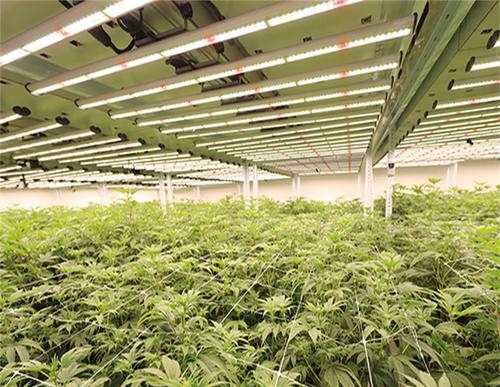
As a general rule, LED grow lights should be placed 12 to 36 inches away from your plants. The exact distance depends heavily on your plant’s growth stage and the light’s wattage: Seedlings require a distance of 24 to 36 inches; plants in the vegetative stage need 18 to 24 inches; and flowering or fruiting plants thrive with the light positioned closer, at 12 to 18 inches. Always monitor your canopy for signs of light burn or stretching.
Transitioning to indoor gardening using an enclosed grow tent or a dedicated vertical farming system offers incredible control over environmental factors. However, among the most critical parameters that indoor growers miscalculate is the physical distance between the LED grow lights and the plant canopy. Unlike traditional High-Pressure Sodium (HPS) or fluorescent fixtures, modern Light Emitting Diodes (LEDs) emit highly concentrated photon streams that can either accelerate growth or completely decimate your crops if positioned incorrectly.
Placing your fixtures too close leads to localized thermal stress and radiation saturation, commonly referred to as light burn. Conversely, hanging your fixtures too far away results in weak, “leggy” seedlings and diminished photosynthetic activity. Achieving the perfect equilibrium ensures optimal photosynthetic photon flux density (PPFD) without stressing your indoor plants, whether you are cultivating delicate succulents, leaf-heavy vegetables, or high-yield cash crops.
To maximize efficiency in your indoor garden, use this comprehensive reference chart outlining recommended hanging heights based on both the growth stage of the plant and the true core wattage of your LED fixture.
| Fixture True Wattage (Not Equivalent) | Seedling Stage Distance (Inches) | Vegetative Stage Distance (Inches) | Flowering/Fruiting Stage Distance (Inches) |
|---|---|---|---|
| Low Power (50W – 100W) | 20″ – 26″ | 14″ – 18″ | 10″ – 14″ |
| Medium Power (150W – 300W) | 24″ – 30″ | 18″ – 24″ | 14″ – 18″ |
| High Power (400W – 600W) | 30″ – 36″ | 24″ – 30″ | 16″ – 20″ |
| Commercial Grade (650W – 1000W+) | 36″ – 42″ | 30″ – 36″ | 18″ – 24″ |
Note: This chart assumes you are utilizing full-spectrum LED fixtures without specialized magnifying optics. Always consult your manufacturer’s PPFD footprint maps when dealing with high-intensity commercial arrays.
Plants are biological machines whose light appetites change dynamically as they age. Understanding these micro-shifts prevents stunted growth and guarantees maximum biomass accumulation.
During the initial lifecycle phase, seedlings possess fragile, underdeveloped root systems and minimal cellular structure. Their main focus is establishing root architecture rather than processing high-intensity photons. If you hang a high-powered light array too close, the intense light will cause rapid moisture loss through transpiration, drying out the cotyledons and killing the plant.
Keep your lights at the upper limit of the distance spectrum (24 to 36 inches). This provides gentle illumination that encourages early chlorophyll production without overwhelming the young tissues.
As your crops enter the vegetative phase, their appetite for light increases exponentially. This is when indoor plants build their structural foundations—thickening stems, expanding fan leaves, and preparing nodes for future budding points. Leafy green vegetables (such as kale, spinach, and lettuce) spend their entire harvest cycle in this phase.
To promote tight internodal spacing and thick, bushy growth, you should lower your LED fixtures closer to the canopy (18 to 24 inches). Bringing the light closer increases the PPFD, ensuring that the lower branches receive sufficient light penetration through the upper leaf layers.
The generative or flowering phase represents the peak energetic demand of a plant’s life. Whether you are growing tomatoes, peppers, or medicinal flowers, the plant requires immense photon density to synthesize the sugars needed for heavy fruit and terpene production.
At this point, you can move your lights to their closest safe distance (12 to 18 inches). The concentrated energy fuels dense bud formations and robust fruit sets. However, because the lights are at their closest proximity, daily monitoring inside your grow tent is imperative to catch any sudden changes in canopy health.
While utilizing a tape measure is an excellent starting point, advanced indoor horticulturists rely on scientific metrics rather than physical distance alone. LED efficiency varies wildly between brands, meaning 200W from a premium brand can deliver double the usable light of a cheap alternative at the exact same distance.
To accurately dial in your light height, you should invest in a dedicated PAR meter or use a reliable smartphone app calibrated with a diffuser. Below is a targeted guide for the PPFD levels your plants should be receiving:
| Plant Type / Lifecycle Stage | Target PPFD Range (μmol/m²/s) | Optimal Hanging Approach |
|---|---|---|
| Seedlings & Rooted Clones | 100 – 300 | Hang high, maximize diffusion across trays |
| Low-Light Houseplants & Succulents | 200 – 450 | Moderate height, maintain balanced ambient spread |
| 400 – 600 | Lower fixture to encourage lateral branching | |
| High-Yield Flowering Crops (No CO²) | 600 – 900 | Maximum close proximity without causing heat stress |
| Commercial Cultivation (With CO² Enrichment) | 1000 – 1500+ | Ultra-close or high-power industrial arrays |
Even with strict adherence to a distance chart, variations in ambient temperature, airflow, and genetics can cause issues. You must train your eye to recognize signs of light distress instantly.
Light burn occurs when the cellular structures of the leaf are overwhelmed by photon radiation, destroying the chlorophyll. It is distinct from nutrient burn and heat stress, though they are frequently confused.
When your LED grow lights are positioned too far away, your plants will suffer from light starvation. This manifests through distinct morphological changes:
To wrap up your optimization protocol, follow these three practical engineering rules inside your growing environment:
While modern LEDs run vastly cooler than old HID bulbs, their driver units still generate ambient heat. Place your bare hand, palm down, directly at the top of your plant canopy. Leave it there for 30 seconds. If the back of your hand feels uncomfortable or hot, the radiant heat is too intense for your plants, and the light must be raised or the ventilation upgraded.
Never drop your lights from a 36-inch seedling height down to a 12-inch flowering height overnight. Sudden shifts in photon density induce plant shock, slowing growth for days. Instead, adjust your hanging systems by 1 to 2 inches per day, allowing the plant tissue to naturally acclimate to the intensifying radiation.
Fast-growing vegetables and flowering species can grow up to 2 inches a day during their transitional stretch. If you leave your setup unattended over a weekend with a light set at a tight 12-inch margin, you may return to find your prime colas grown directly into the LED diodes, causing massive crop damage. Always build a safety buffer into your hanging configuration.
Finding the absolute perfect height for your LED grow lights requires balancing scientific measurements with careful observation. By starting with our verified led grow light distance chart, monitoring for early signs of light stress, and adjusting according to the specific developmental stages of your indoor plants, you will unlock the true genetic potential of your crops. Keep your environment stable, watch your canopy closely, and let the advanced spectrum of your LEDs do the rest.