Beautiful Plants For Your Interior
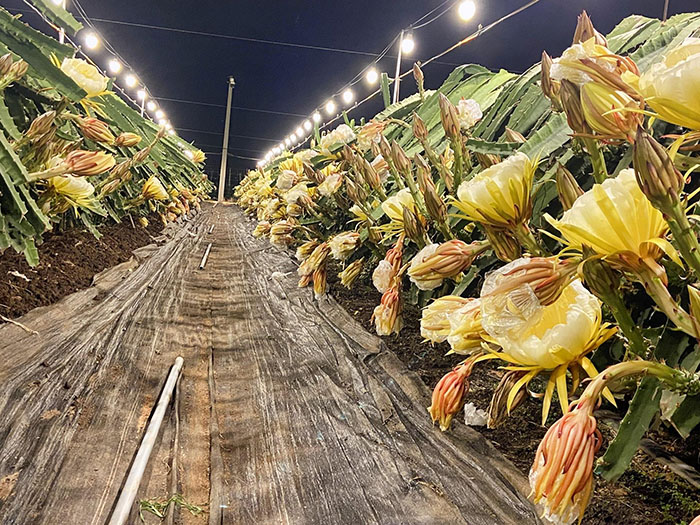
Optimizing your grow light height and spacing is essential for maximizing photosynthetic efficiency, preventing canopy thermal stress, and achieving peak crop yields. Whether you are operating a commercial horticultural facility or managing an indoor grow room, finding the perfect balance between light intensity (PPFD) and uniform canopy coverage directly dictates plant development. When sourcing commercial fixtures from specialized suppliers like FruitGrowLight, growers rely on engineered lámparas de cultivo and full-spectrum luz para crecimiento vegetal designed to deliver consistent daily light integral (DLI) across every growth stage.
In this scientific guide, we break down the inverse square law, stage-by-stage hanging distance charts, plant-specific PPFD recommendations, and real-time calibration steps to help you configure your lighting system for maximum return on investment.
Setting the correct grow light height and spacing requires a clear understanding of light physics and plant photobiology. According to Apogee Instruments light measurement research, effective indoor lighting depends on three core rules:
Refer to the table below to determine appropriate hanging distances for LED, Fluorescent, and HID fixtures across key growth phases:
| Growth Stage | LED Hanging Height | Fluorescent Height | HID Hanging Height |
|---|---|---|---|
| Seedlings / Clones | 24–36 inches (60–90 cm) | 4–6 inches (10–15 cm) | Not Recommended |
| Vegetative Phase | 18–24 inches (45–60 cm) | 6–12 inches (15–30 cm) | 24–36 inches (60–90 cm) |
| Flowering / Fruiting | 12–18 inches (30–45 cm) | Not Ideal | 18–24 inches (45–60 cm) |
Pro Tip: Always adjust hanging height based on ambient heat output and plant feedback. If top leaves begin curling upwards or bleaching, raise your fixtures immediately. Use a calibrated PAR meter at canopy level for exact PPFD readings.
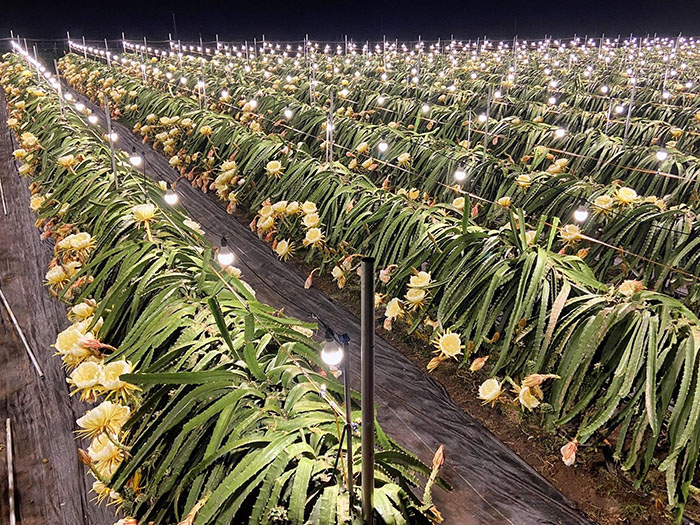
Proper grid layout ensures equal photon distribution across the entire plant bed without creating hot spots or dark zones:
Different crop species demand tailored light levels for optimal biomass production:
Follow these operational steps to continuously maintain exact grow light height and spacing throughout the grow cycle:
Q1: Why is PPFD more important than Lux when setting grow light height?
A: Lux measures light intensity human eyes perceive, while PPFD ($\mu\text{mol/m}^2/\text{s}$) measures the exact number of photosynthetically active photons available for plant growth.
Q2: How often should I adjust my grow light hanging height?
A: During fast vegetative growth, measure canopy height and adjust light positions at least once a week to prevent photo-bleaching or leggy stems.
Q3: Can I use light meter phone apps like Photone to measure PPFD?
A: Mobile apps provide useful estimates for home growers, but commercial facilities should calibrate them against dedicated PAR quantum sensors for accurate results.
Q4: Where can I buy specialized LED grow lights or request custom lighting layouts?
A: For technical consultations, commercial farm designs, or factory orders, email tadiran@tatalux.com or visit FruitGrowLight.
Scan QR code to chat with our grow light specialist!