Beautiful Plants For Your Interior
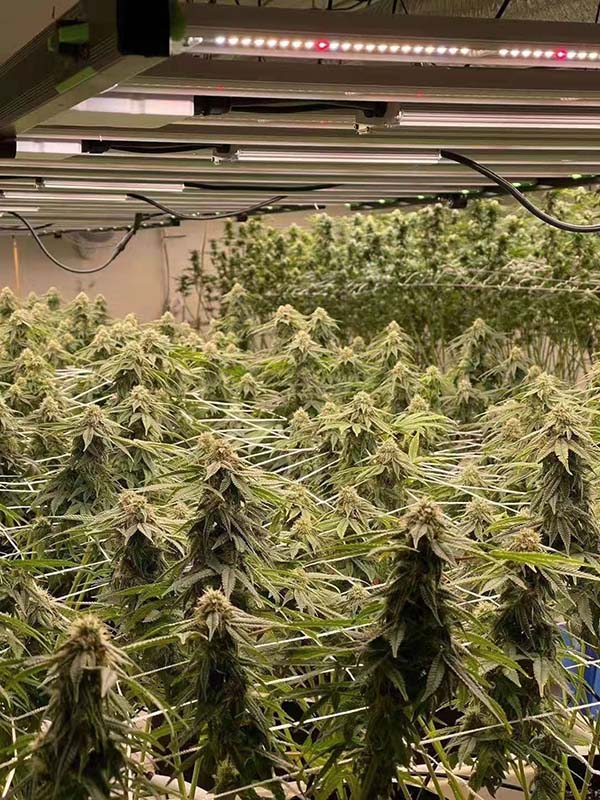
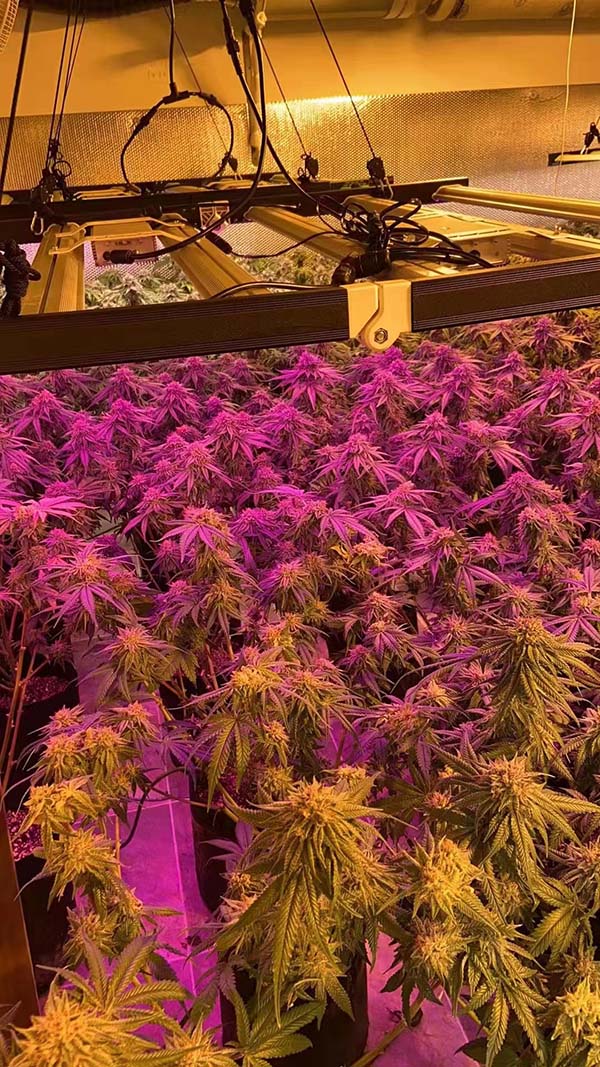
To avoid light burn and maximize growth, position LED fixtures at:
Always monitor leaf tips daily. If leaves curl upward or show bleaching, increase the hanging height immediately[cite: 1].
Placing your fixtures too close leads to localized thermal stress and radiation saturation, commonly referred to as light burn[cite: 1]. Conversely, hanging your fixtures too far away results in weak, “leggy” seedlings and diminished photosynthetic activity[cite: 1]. Achieving the perfect equilibrium ensures optimal photosynthetic photon flux density (PPFD) without stressing your indoor plants, whether you are cultivating delicate succulents, leaf-heavy vegetables, or high-yield cash crops[cite: 1].
When deploying advanced lámparas de cultivo LED or full-spectrum luz LED para plantas across commercial green houses or private indoor setups, controlling the physical distance between the photon source and the plant canopy is just as critical as choosing the right fixture wattage[cite: 1]. For custom OEM solutions and industrial agricultural consulting, visit our About Us page[cite: 1].
For high-value crops and cannabis cultivation, more light is not necessarily better; of course, neither is less light[cite: 1]. Every cultivar operates within distinct biological boundaries defined by light physics and plant respiration[cite: 1]:
Within a certain range of light intensity, photosynthesis increases as light intensity increases[cite: 1]. However, beyond a specific threshold, photosynthesis plateaus and no longer increases[cite: 1]. This critical point of photon exposure is referred to as the light saturation point[cite: 1]. Exceeding this threshold without added atmospheric carbon dioxide ($\text{CO}_2$) supplementation wastes energy and risks severe photo-inhibition[cite: 1]. According to research published by UF/IFAS Extension Agriculture, managing daily light exposure prevents cellular degradation in high-intensity crops[cite: 1].
Below the light saturation point, as light intensity decreases, photosynthesis also diminishes[cite: 1]. The light intensity at which the organic matter produced by plants through photosynthesis exactly balances the matter consumed through natural respiration is known as the light compensation point[cite: 1]. If your fixtures are hung too far away, plants sink below this point and slowly starve[cite: 1].
Keep your lights at the upper limit of the distance spectrum (24 to 36 inches)[cite: 1]. This provides gentle illumination that encourages early chlorophyll production without overwhelming the delicate young tissues[cite: 1].
To promote tight internodal spacing and thick, bushy growth, you should lower your LED fixtures closer to the canopy (18 to 24 inches)[cite: 1]. Bringing the light closer increases the PPFD, ensuring that the lower branches receive sufficient light penetration through the upper leaf layers[cite: 1].
At this point, you can move your lights to their closest safe distance (12 to 18 inches)[cite: 1]. The concentrated photon energy fuels dense bud formations and robust fruit sets[cite: 1]. However, because the lights are at their closest proximity, daily monitoring inside your grow tent is imperative to catch any sudden changes in canopy health[cite: 1].
Use the following technical reference table to set hanging height and target PPFD parameters across crop developmental stages[cite: 1]:
| Growth Stage | Target LED Distance | Target PPFD Range | Primary Canopy Goal |
|---|---|---|---|
| Seedlings & Clones | 24 – 36 inches (60 – 90 cm) | 100 – 300 $\mu\text{mol/m}^2/\text{s}$ | Prevent stem stretching; support root establishment[cite: 1]. |
| Vegetative Growth | 18 – 24 inches (45 – 60 cm) | 300 – 600 $\mu\text{mol/m}^2/\text{s}$ | Build thick stems and dense lateral branching[cite: 1]. |
| Flowering & Fruiting | 12 – 18 inches (30 – 45 cm) | 600 – 1000+ $\mu\text{mol/m}^2/\text{s}$ | Maximize flower density, resin, and fruit size[cite: 1]. |
| Low-Light Succulents/Greens | 20 – 30 inches (50 – 75 cm) | 150 – 350 $\mu\text{mol/m}^2/\text{s}$ | Maintain crisp foliage without thermal stress[cite: 1]. |
Unlike nutrient burn, which typically causes yellowing or browning starting at the leaf margins on lower leaves, light burn specifically impacts the foliage closest to the LED fixture[cite: 1]. Common symptoms include:
Correction Strategy: If light burn occurs, immediately raise your fixtures by 4 to 6 inches or reduce dimmer intensity by 15–20%[cite: 1]. Monitor top leaf recovery over 48 hours[cite: 1].
Q1: What is the difference between heat burn and light burn?
A: Heat burn is caused by high ambient temperatures and leads to dry, wilted leaves across the canopy[cite: 1]. Light burn is caused by excessive photon concentration (PPFD) and causes bleaching on the leaves directly under the fixture, even when temperatures are ideal[cite: 1].
Q2: Can I hang dimmable LED grow lights closer if I turn down the intensity?
A: Yes[cite: 1]. Dimming your LED light allows you to hang the fixture closer to the canopy while maintaining the appropriate PPFD, helping manage low vertical space inside small grow tents[cite: 1].
Q3: How do I know if my grow light is too far away?
A: If your seedlings grow tall, thin, and spindly (etiolation) or fall over easily, your lights are too far away and fall below the light compensation point[cite: 1].
Q4: How can I order specialized LED grow lights or OEM fixtures?
A: Contact our technical sales team directly at tadiran@tatalux.com or visit FruitGrowLight[cite: 1].
Scan QR code to chat with our grow light specialist!