Beautiful Plants For Your Interior
Optimize chrysanthemum flowering, stem quality, and yield with LED grow lights. Learn how full-spectrum lighting, photoperiod regulation, and custom spectrums improve commercial greenhouse production.
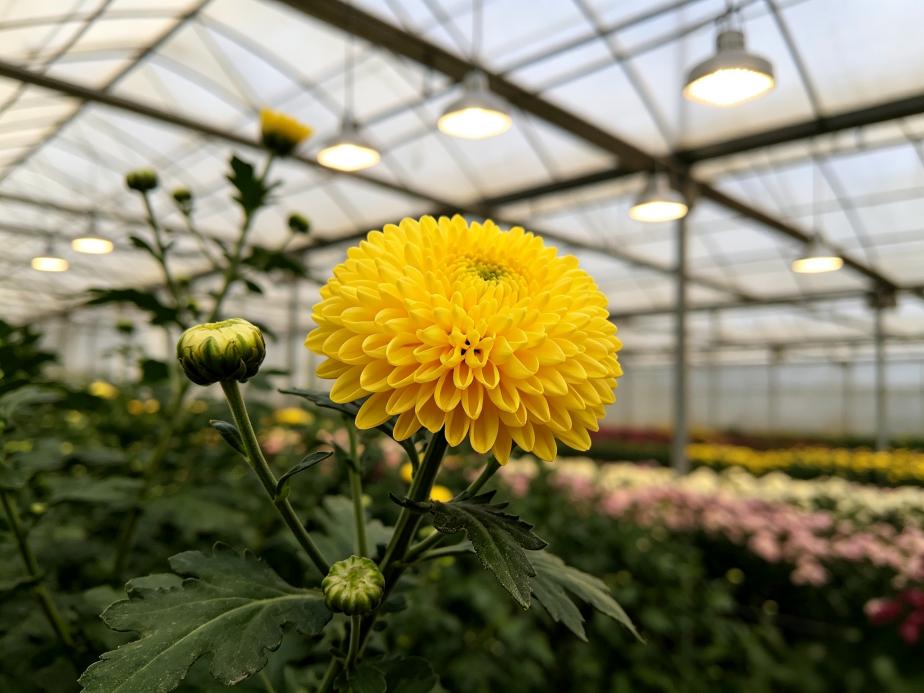
Soluciones de iluminación LED para crisantemos en invernadero: Guía de selección para optimizar la floración y la calidad de la flor.

Greenhouse-cultivated chrysanthemums are essential commercial horticultural crops grown for multiple high-value markets, including cut flower production, potted ornamentals, and landscape landscaping. These photoperiod-sensitive flowers rely heavily on consistent, high-quality light exposure to govern vegetative growth, stem elongation, and flower bud initiation.
In modern commercial greenhouses, supplemental growlights are widely deployed because natural sunlight fluctuates significantly during winter, prolonged overcast weather, or high-latitude rainy seasons. A chronic shortage of natural sunlight leads to weak stems, delayed blooming, and underdeveloped flower heads.
LED plant grow lights (luces LED para cultivo) have emerged as the premier greenhouse lighting solution due to their high energy efficiency, low thermal output, and tunable spectrum capabilities. By selecting specialized LED spectrums, floriculture growers can precisely regulate growth cycles and produce premium-grade chrysanthemums year-round.
Chrysanthemums are short-day plants that require precise photoperiod management and light intensity triggers to transition from vegetative growth to the reproductive blooming phase.
Deploying engineered LED grow lights allows floriculturists to adjust light levels on demand, providing optimal conditions for dense bud formation and premium cut-flower quality.
Plants respond distinctively to individual light wavelengths. Modern LED grow lights can be customized to deliver specific spectral recipes tailored for floriculture:
Commercial greenhouse chrysanthemum management centers around two vital production stages where supplemental lighting plays a decisive role:
Choosing the ideal LED grow light system requires evaluating greenhouse infrastructure, plant density, and target production goals:
For commercial floriculture and greenhouse chrysanthemum cultivation, Tadiran LED Grow Lights offer high-efficacy, durable, and spectrum-customized supplemental lighting solutions engineered to maximize bloom quality and operational efficiency.
Flexible fixture configuration ensures optimal light uniformity across greenhouse benches:
Operating schedules (photoperiods) must be calibrated according to seasonal natural daylight hours to supply consistent, balanced daily light integrals without over-stressing plants.
Upgrading to modern LED plant grow lights provides multiple strategic advantages over legacy HPS or fluorescent systems:
Light management is a cornerstone of success in commercial chrysanthemum production. LED plant grow lights provide growers with an unprecedented ability to control plant morphology, schedule harvest timing, and improve flower quality.
By applying tailored spectral recipes and precise light volumes, commercial farms can guarantee uniform, high-grade flower yields regardless of ambient weather conditions. As greenhouse technology continues to advance, science-backed LED grow light solutions will remain an essential driver of efficiency and profitability in modern floriculture.
Los crisantemos son plantas muy sensibles al fotoperiodo y requieren luz de alta calidad para un crecimiento vegetativo fuerte y una floración uniforme. Las **luces LED de espectro completo** permiten suplementar la falta de luz solar en invierno, controlar la época de floración, mejorar el grosor del tallo y garantizar flores de calidad comercial superior con un consumo de energía muy bajo.