Beautiful Plants For Your Interior
Discover if LED plant growlights are effective for commercial farming. Learn how artificial lighting regulates flowering, improves fruit quality, and boosts yield for pitahaya and high-value crops.
¿Las luces LED de cultivo son efectivas? Cómo la iluminación artificial aumenta el rendimiento y las ganancias en la agricultura.

Light is one of the core factors governing plant growth, flowering, and fruiting in cultivation. However, natural sunlight is inconsistent by nature. Fluctuations brought by seasonal shifts, prolonged rainy weather, greenhouse shading, and regional light disparities often leave plants deprived of sufficient usable light.
In recent years, commercial farms (agricultura comercial) have widely adopted LED plant growlights (luz LED de cultivo) to artificially optimize crop growing environments.
Still, many growers raise a crucial question:
Are plant growlights truly effective? What benefits can they bring to farming operations?
The answer is yes. Engineered growlight systems not only improve the light environment for crops but also enable growers to precisely stabilize production cycles, enhance fruit quality, and significantly raise overall cultivation efficiency.
Photosynthesis sustains all plant life, and its efficiency hinges directly on both light duration and light spectrum quality. Under conditions of short daylight hours in winter, persistent overcast weather, or poorly lit growing plots, crops are limited in the energy they can capture.
Chronic light shortage leads to stunted growth, fewer blooms, and underdeveloped fruits. Plant growlights supply crops with their required light spectrum indoors and outdoors during low-light periods, ensuring a consistent and optimal daily photoperiod.
For commercial farming, this means growers are no longer fully at the mercy of unpredictable weather. Artificial growlights put control of growing conditions directly in the farmer’s hands.
For high-value cash crops, light influences not just vegetative growth, but also the entire flowering and fruiting cycle.
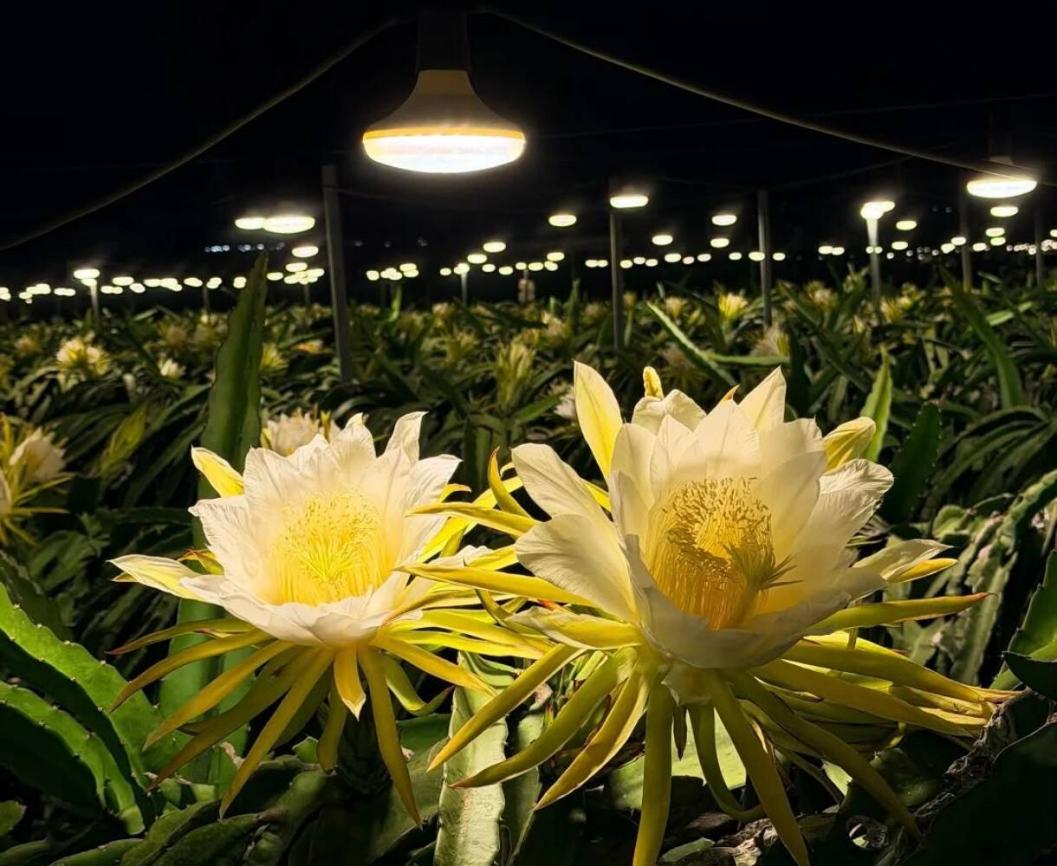
Take pitahaya (dragon fruit) cultivation as a prime example: shifts in photoperiod directly govern flower bud formation. In regions entering short-daylight seasons, pitaya plants produce far fewer blooms and experience shortened production windows.
Strategic use of LED growlights extends daily light exposure, maintaining the optimal lighting conditions required for continuous growth and off-season flowering. This is why numerous commercial pitaya orchards implement night-time growlight systems—by artificially regulating photoperiods, growers stimulate more flowering cycles and secure consistent, higher annual yields.
For fruit growers and agricultural exporters, yield volume alone does not determine overall revenue; fruit quality plays an equally vital role. Adequate, balanced light fuels robust photosynthesis, allowing plants to accumulate abundant sugars and nutrients essential for sound fruit development.
In global agricultural production, proper light management directly improves:
This advantage stands out prominently for high-value crops, including pitahaya, strawberries, blackberries, and tomatoes. Stable lighting conditions help farms deliver premium-grade produce that commands higher market prices.
When considering purchasing growlights, most growers first weigh the initial equipment cost. However, for commercial farms, long-term profitability carries far greater weight.
A well-designed growlight system extends production cycles, maximizes land utilization efficiency, and mitigates risks posed by volatile climate patterns. That said, the effectiveness of growlights does not merely depend on having lights installed—compatibility with the specific crop is critical.
Professional growlight systems must be customized based on:
Only fixtures with targeted spectrums, appropriate wattage, and scientifically planned installation layout can unlock the full potential of plant growlights.
Tadiran LED grow lights are engineered specifically for commercial agricultural applications, providing reliable, energy-efficient supplemental lighting solutions tailored for various crops and outdoor orchard environments.
Plant growlights are far more than mere lighting fixtures; they represent a modern, strategic agricultural management tool.
By implementing a scientific supplemental lighting plan, growers can:
As agricultural technology advances, an increasing number of commercial growers are leveraging LED plant growlights to upgrade their cultivation models. For farms aiming to raise yields, stabilize supply, and increase product value, science-backed growlight solutions represent an indispensable trend in modern agriculture.
Las luces LED de cultivo sí son efectivas. No reemplazan al sol, sino que complementan la falta de luz natural causada por el clima o el cambio de estación. Permiten a los agricultores regular el fotoperiodo (especialmente en cultivos como la pitahaya), estimular la floración fuera de temporada, mejorar la calidad del fruto y garantizar cosechas estables y rentables durante todo el año.