Beautiful Plants For Your Interior
Beautiful Plants For Your Interior

Choose the best LED grow light for greenhouse peppers (chili/bell peppers). Learn wattage selection (100W-150W), full-spectrum benefits (PPFD 220-420), and row lighting layouts.
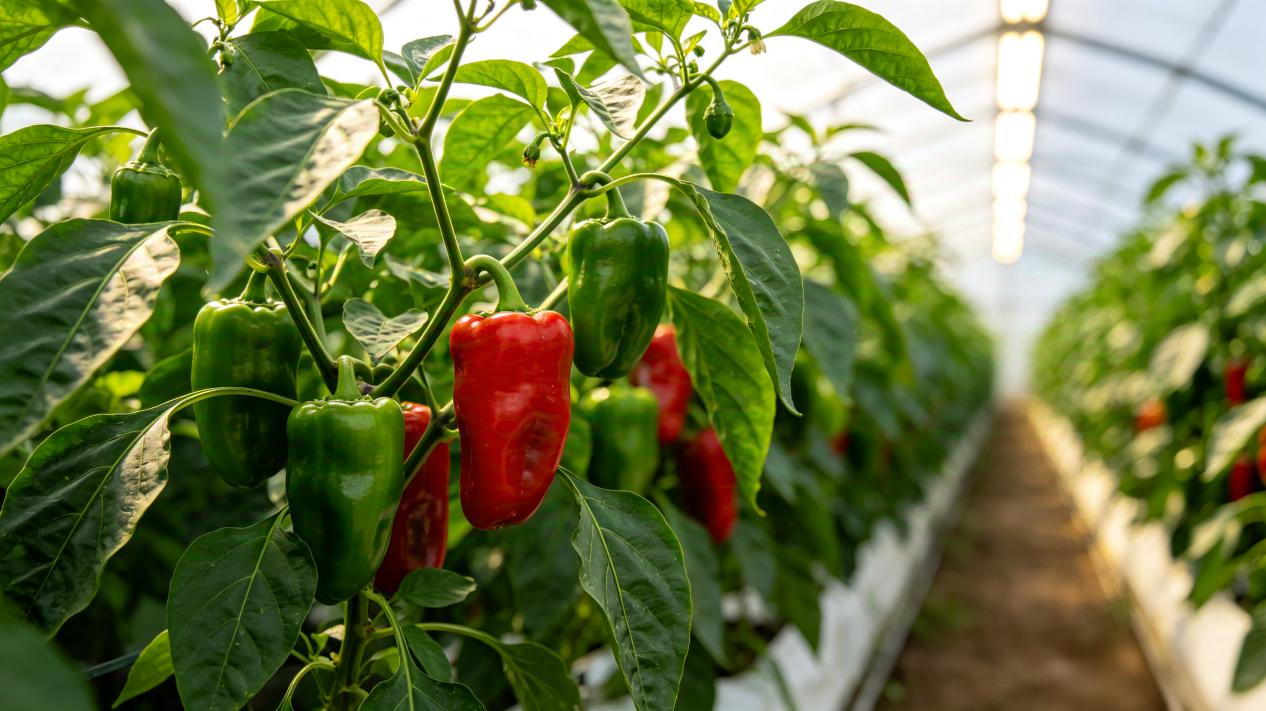
Guía de luces de cultivo LED para chiles y pimientos en invernadero: Cómo elegir la mejor iluminación artificial para maximizar el rendimiento.

Selecting the right pepper grow light is crucial for commercial greenhouses, as peppers are high-light cash crops that depend heavily on photosynthetically active radiation.
While specific pepper varieties and cultivation seasons vary, standard commercial greenhouse lighting parameters require:
When natural sunlight falls short, pepper plants experience severe physiological deficits:
During winter, low solar angles, shorter days, and persistent rain, snow, or fog cause severe natural light deficits. In spring and autumn, greenhouse structural shading further restricts usable solar radiation. LED growlights (luces LED de cultivo / luz de cultivo para chile y pimiento) bridge these gaps to ensure continuous flowering and uniform fruit expansion year-round.
Selecting the correct LED wattage is not simply about buying the highest power fixture available. Wattage must be matched carefully with greenhouse conditions, planting density, mounting height, and target light intensity (PPFD):
| Greenhouse Category | Recommended Wattage | Primary Application & Target Use |
|---|---|---|
| Seedling & Small Research Greenhouses | 50W – 100W | Used for seedling propagation and localized light compensation in low-light zones. Meets foundational growth needs for young pepper starts. |
| Standard Commercial Pepper Greenhouses | 100W – 150W | The mainstream sweet spot for multi-span and cold-frame greenhouses. Ideal for inter-row layouts across linear, cluster, and pickling pepper varieties. |
| High-Yield Dense Planting & Low-Light Bases | 150W – 300W | Designed for overwintering single-crop cycles and high-density commercial orchards requiring high canopy penetration. |
Different fixture form factors align with specific pepper production phases:
Photosynthesis occurs predominantly within the 400nm to 700nm photosynthetically active radiation (PAR) waveband. Premium full-spectrum LED growlights incorporate targeted wavelengths to drive specific developmental responses:
Tadiran offers specialized full-spectrum LED grow light systems engineered for commercial greenhouse crops, including peppers, strawberries, tomatoes, and pitahaya. Increase yields and stabilize year-round production with factory-direct solutions.
Modern commercial greenhouses utilize a collaborative “Natural Daylight + LED Supplemental Light” strategy:
For high-density overwintering pepper crops, LED linear lights positioned within or above crop rows effectively eliminate canopy shading. This guarantees uniform photon absorption for both upper and lower fruits, reducing green or blotchy fruit rates and ensuring even ripening.
For standard commercial pepper greenhouses, 100W–150W full-spectrum LED growlights offer the highest cost-to-performance ratio and practical versatility. Large-scale contiguous bases and low-light overwintering operations can deploy higher wattage fixtures or customized spectral layouts.
Full-spectrum LED growlights create a stable, climate-independent light environment for pepper cultivation. By overcoming seasonal winter light deficits, commercial growers can eliminate flower drop, accelerate fruit expansion, enhance skin coloration, and secure premium market prices year-round.
El chile y el pimiento son cultivos de alta demanda lumínica (requieren entre 12 y 16 horas de luz diarias con un PPFD de 220–420 μmol/m²/s). La falta de luz causa la caída de flores, tallos débiles y frutos deformes o de coloración desigual. Las **luces LED de espectro completo (100W–150W)** para invernaderos permiten suplir las deficiencias de luz en invierno o días lluviosos, garantizando una floración continua, maduración uniforme y mayor rendimiento comercial.
Scan QR code to chat with our grow light specialist!