Beautiful Plants For Your Interior
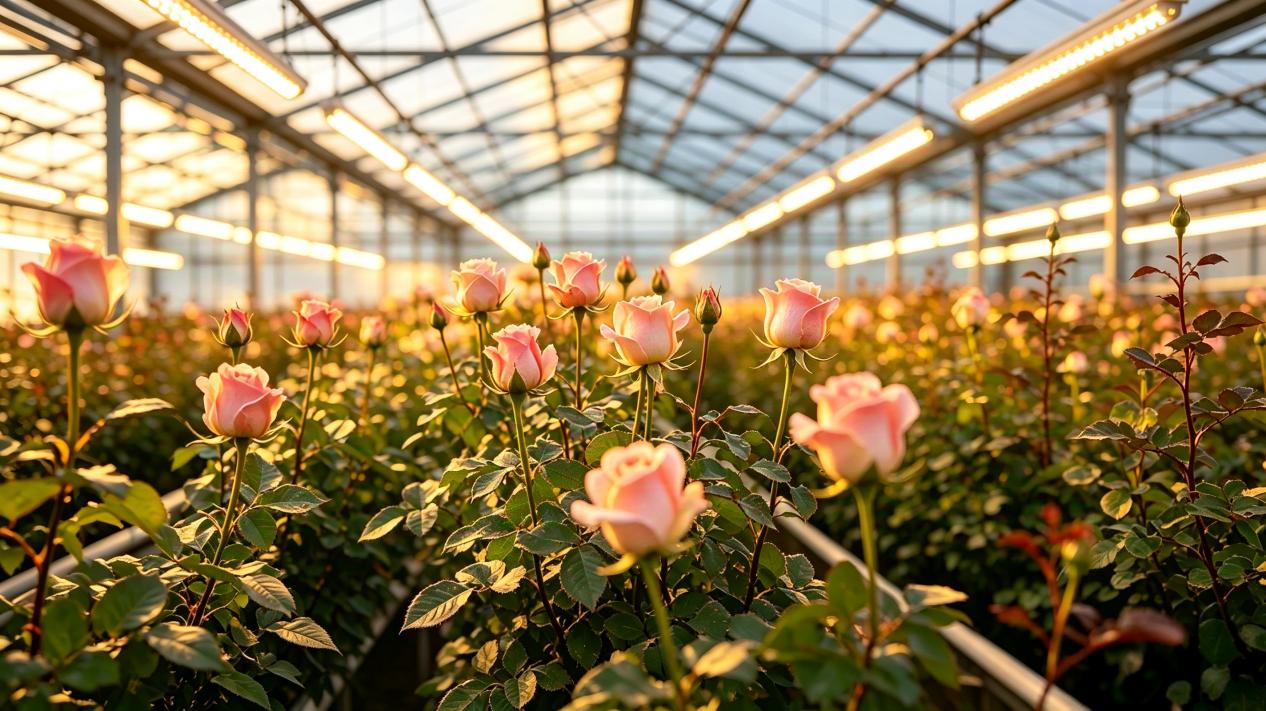
Guía de selección de luces LED de cultivo para rosas de invernadero: cómo mejorar el crecimiento y la calidad floral de las rosas con luces LED para plantas
Roses are high‑value commercial flowers widely cultivated for cut‑flower production, horticulture and greenhouse farming. Light management is one of the most critical factors determining rose growth performance and flower quality.
Even though roses can adapt to varied growing conditions, they frequently suffer insufficient natural sunlight in winter, rainy seasons or high‑latitude low‑sunlight regions. Light shortage inside greenhouses will trigger slow vegetative growth, poor leaf development and low‑grade blooms.
To solve this problem, numerous greenhouse operators adopt LED grow lights. Supplemental LED lighting delivers stable, tailored light input, enabling year‑round healthy rose cultivation.
Tadiran delivers professional LED grow‑light solutions for greenhouse roses and other high‑value commercial crops, ensuring consistent and efficient light supply. Explore Tadiran LED Grow Light Products >>]
Roses belong to high‑value ornamental crops for cut‑flower trade and protected greenhouse planting. Light conditions directly govern plant vigor and commercial flower output.
Under greenhouse conditions, inadequate solar irradiance commonly appears during short‑day winter months or persistent cloudy‑rainy weather. Insufficient sunlight causes stunted growth, defective foliage and inferior flower buds, greatly hurting farm yields and profits.
LED supplemental grow lights compensate for natural light deficits. By supplying stable, appropriate light spectrum and light quantity, LED systems build a favorable growing environment so roses can thrive and bloom all year long.
Light impacts rose performance through two core dimensions: light intensity and light spectrum. Red light, blue light and full‑spectrum light are three main spectral options for greenhouse rose cultivation.
Red Light Red light plays a vital role in photosynthesis and biomass accumulation. It supplies energy for leaf, stem and flower development. However, excessive red‑light proportion may result in excessive internode elongation and weak, floppy stems.
Blue Light Blue light supports compact, sturdy plant architecture. It enlarges leaf area, strengthens stem tissues and suppresses undesirable stretch‑growth. Reasonable combination of red light plus blue light produces robust rose bushes together with premium‑quality blossoms.
Full‑Spectrum Light Full‑spectrum LED grow lights represent the optimal solution for year‑round rose planting. They cover the complete spectral requirements for rose vegetative growth and flower initiation, maintaining stable plant health and continuous flowering output.
When you select LED grow lights for roses, do not judge purely by planting area size. You need to evaluate greenhouse dimension, plant density, available natural sunlight and your production targets. Rather than only focusing on nominal wattage, pay more attention to actual usable light delivered to canopy level.
For greenhouse deployment, LED grow lights are commonly suspended from the greenhouse ceiling. This hanging mounting method facilitates height adjustment and distributes even illumination down toward crop canopies. Slim linear LED grow lights are highly recommended for densely‑planted rose beds to avoid light‑blocking between adjacent plants.
Daily lighting runtime depends on local natural‑light conditions. During winter or heavily overcast days, supplemental lighting runs 4‑8 hours per day to satisfy rose light demand.
Important reminder: Roses require mandatory dark periods for normal metabolism. Running lights 24/7 damages rose physiology and creates unnecessary energy waste.
Compared with legacy traditional grow‑light sources, commercial LED grow lights feature lower energy consumption and spectrally‑optimized output specially tailored for floral crops.
✅ Promote photosynthesis and improve overall rose plant vigor
✅ Support thicker stems and better‑formed cut flowers
✅ Low heat emission: prevent plant burn‑injuries and avoid overheating the greenhouse interior
✅ Extended service life, reducing long‑term operational replacement costs
When designing LED supplemental‑lighting systems for greenhouse roses, take greenhouse scale, rose planting layout, local climate and production objectives into consideration. Choose reliable LED grow lights with crop‑matched spectrum that can withstand high‑humidity greenhouse environments.
Quality LED grow lights deliver suitable light quality and sufficient light quantity. When combined with well‑planned installation and lighting timetables, they enable continuous production of high‑grade roses throughout every season.
LED grow lights have become indispensable equipment for modern greenhouse rose cultivation. They not only compensate for insufficient natural sunlight, but also construct optimized light environments to support healthy plants and desirable flower yields.
For greenhouse rose growers, proper LED grow‑light selection plus correct operational management is critical to achieving stable year‑round production of healthy, market‑valuable roses.