Beautiful Plants For Your Interior
Beautiful Plants For Your Interior

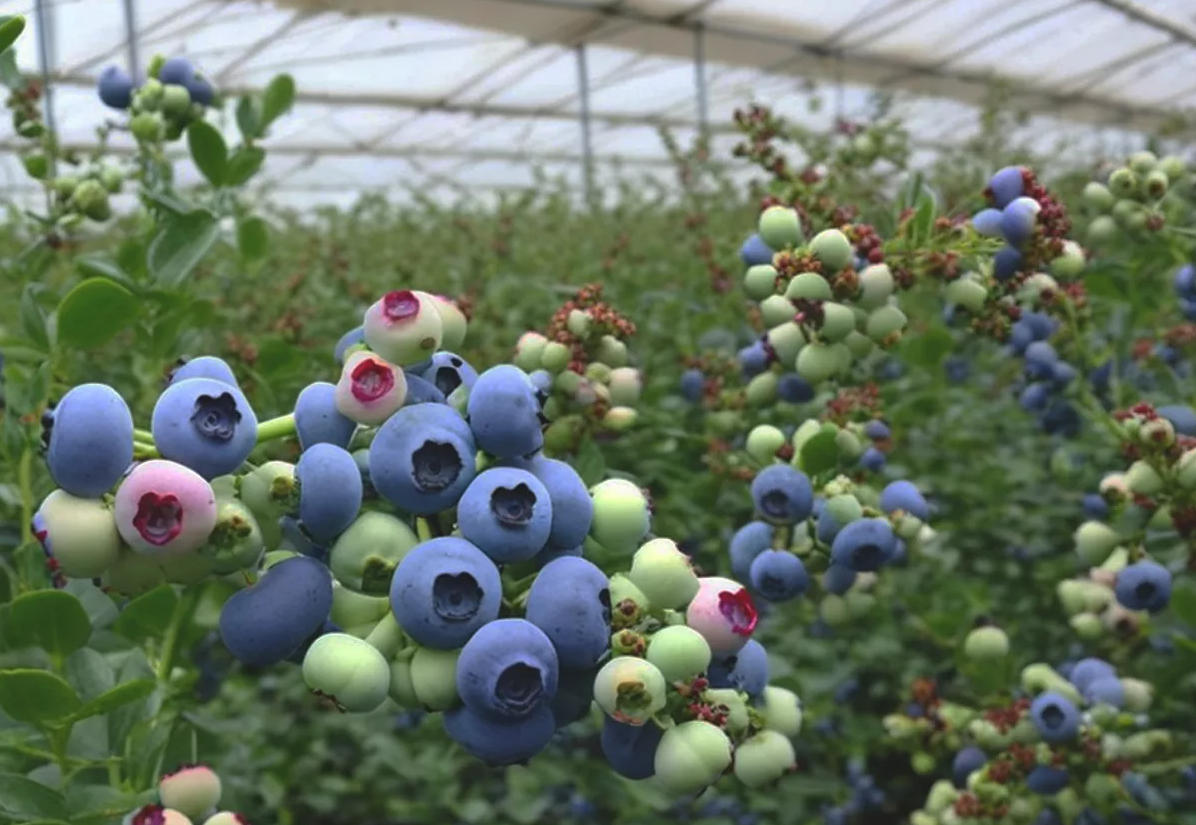
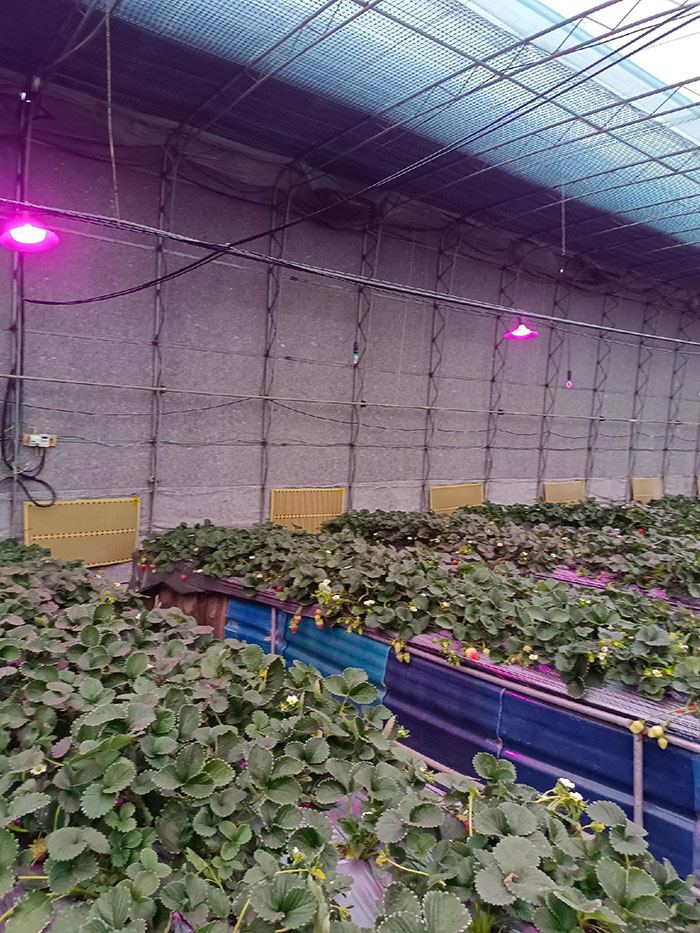
For the vast majority of indoor gardeners, sun-like white Full Spectrum LED grow lights are superior to traditional Red/Blue (“Blurple”) LED lights. While targeted Red/Blue lights are highly energy-efficient because they focus exclusively on wavelengths that drive basic chlorophyll absorption, full spectrum LEDs mimic natural sunlight by providing a complete continuum of wavelengths (including green, yellow, far-red, and trace UV). This comprehensive spectral delivery results in healthier crop morphology, superior chemical/terpene synthesis, higher harvest weights for heavy vegetables, and a vastly superior working environment for human eyes inside your grow tent.
Walk into an indoor farm or open up a home cultivation setup, and you will likely notice one of two distinct visual environments: a space illuminated by a blinding, natural white glow that looks identical to a high-end commercial office space, or an area bathed in an intense, vibrant pinkish-purple hue. This pinkish-purple coloration is affectionately referred to in the indoor cultivation industry as “blurple.” These two contrasting visual environments represent the major evolutionary divide in modern LED grow lights.
For over a decade, early-generation LED arrays relied on narrow-band red and blue diodes to drive plant growth. These legacy setups were engineered around early botanical assumptions regarding chlorophyll light absorption. However, modern plant physiology has evolved. Today, premium commercial growers are moving toward high-CRI, sun-like full-spectrum fixtures. Choosing between these two technologies requires understanding how indoor plants process different colors of light across their entire lifecycles—from early seedlings to mature flowering specimens. Whether setting up high-efficiency vertical arrays or evaluating luz LED para fresas y frutillas (strawberry grow lights), analyzing full spectrum vs red blue LED options ensures optimal crop development. To learn more about our commercial engineering standards and OEM manufacturing, visit our About Us page.
To help you evaluate these options quickly, this table compares the operational differences, biological impacts, and practical considerations of full-spectrum and targeted red/blue fixtures:
| Evaluation Metric | Sun-Like Full Spectrum LEDs (White Light) | Targeted Red / Blue LEDs (“Blurple” Light) |
|---|---|---|
| Visual Appearance | Bright white, natural daylight appearance (typically 3000K–5000K). | Deep pink, purple, or magenta hue; highly unnatural to human eyes. |
| Wavelength Coverage | Broad, continuous spectrum ($400\text{nm}$ to $730\text{nm}+$), including green, yellow, and far-red. | Narrow, isolated peaks strictly at $430\text{nm}–450\text{nm}$ (Blue) and $640\text{nm}–660\text{nm}$ (Red). |
| Canopy Penetration | Excellent. Green wavelengths penetrate deep into lower leaf layers. | Poor. Red and blue photons are rapidly absorbed by upper canopy leaves. |
| Plant Diagnostics & Maintenance | Easy to spot nutrient deficiencies, mold, pests, and root issues early. | Extremely difficult to see true leaf color; requires specialized grow room glasses. |
| Morphological Control | Promotes natural stretching, thick stems, and healthy, balanced plant structures. | Can cause hyper-compact internodal spacing; may result in loose lower bud structures. |
| Energy Efficiency (PPE) | High to ultra-high efficiency in premium modern fixtures ($2.7 – 3.2 \ \mu mol/J$). | Efficient on paper for isolated absorption, but lower overall yield efficiency. |
To understand why “blurple” light fixtures exist, we have to look back at the early history of plant biology and the development of the McCree Action Spectrum. In the 1970s, botanist Dr. H.J. McCree charted which wavelengths of light drove the highest rates of photosynthesis in extracted leaf cells. His research confirmed that isolated plant chlorophyll molecules absorb light most efficiently in two distinct regions of the PAR spectrum:
Early LED manufacturers combined cheap red and blue diodes to target chlorophyll A and B absorption peaks. While efficient in theoretical leaf-cell models, growing whole plants in closed grow tents exposed major drawbacks in isolated spectrum delivery.
Sunlight is a seamless spectrum from ultraviolet to far-red. Modern full-spectrum LED panels utilize phosphor-coated white diodes to recreate this natural spectrum. Including green and yellow light—once thought wasteful—explains why full-spectrum arrays consistently outperform narrow red/blue fixtures.
Red and blue photons are absorbed aggressively by the uppermost leaf layers, leaving lower branches in deep shade. Green photons, however, bounce through upper leaves to reach inner and lower canopy zones. This subsurface illumination activates shaded leaves, increasing overall canopy photosynthetic efficiency and producing uniform yields.
Full-spectrum lights incorporate Far-Red light ($730\text{nm}$). When plants receive deep red ($660\text{nm}$) and far-red ($730\text{nm}$) simultaneously, photosynthesis speeds up beyond what either wavelength achieves alone. This phenomenon, known as the Emerson Enhancement Effect, accelerates flowering transitions and optimizes plant structure.
Leafy greens like lettuce, kale, and spinach thrive under full-spectrum lighting. Green and yellow light components maintain crispness and optimize flavor profiles. A cooler white spectrum with a blue emphasis (e.g., $5000\text{K}$) keeps these vegetables compact and prevents early bolting.
Vibrant colors in succulents stem from protective anthocyanin pigments produced under broad-spectrum light. Growing succulents under “blurple” light often turns them a dull, muted green. High-CRI full spectrum lámparas de cultivo LED recreate natural sunlight, preserving intense pigments and compact growth.
For high-demand crops like indoor tomatoes, peppers, and commercial strawberries (luz LED para fresas), dynamic full-spectrum lighting is essential. According to agricultural research sources, using a $4000\text{K}$ spectrum during vegetative growth maintains tight nodes, while transitioning to a warm $3000\text{K}$ spectrum enriched with $660\text{nm}$ deep-red and $730\text{nm}$ far-red drives maximum fruit expansion and sugar content (Brix).
Working under intense “blurple” light causes eyestrain, headaches, and distorted color vision. More importantly, diagnosing plant health under purple light is nearly impossible. Early iron or magnesium deficiencies show subtle leaf yellowing that goes unnoticed under purple light until damage spreads.
Full-spectrum white LEDs provide a clear, natural environment for inspecting indoor plants. Growers can evaluate foliage health, monitor moisture, check for pests, and trim leaves accurately without needing corrective glasses or flashlights.
While narrow-band red/blue LEDs helped launch early indoor lighting technology, full-spectrum white LEDs are the clear industry standard. By delivering a complete solar continuum that reaches deep canopy layers, triggers metabolic pathways, and provides a clear working environment, full-spectrum fixtures maximize crop health and grower efficiency.
Upgrade your greenhouse or indoor facility with full-spectrum LED grow lights designed for superior canopy penetration and maximum energy efficiency. FruitGrowLight delivers commercial engineering, custom spectral tuning, and factory-direct pricing.
Scan QR code to chat with our grow light specialist!