Beautiful Plants For Your Interior
Beautiful Plants For Your Interior

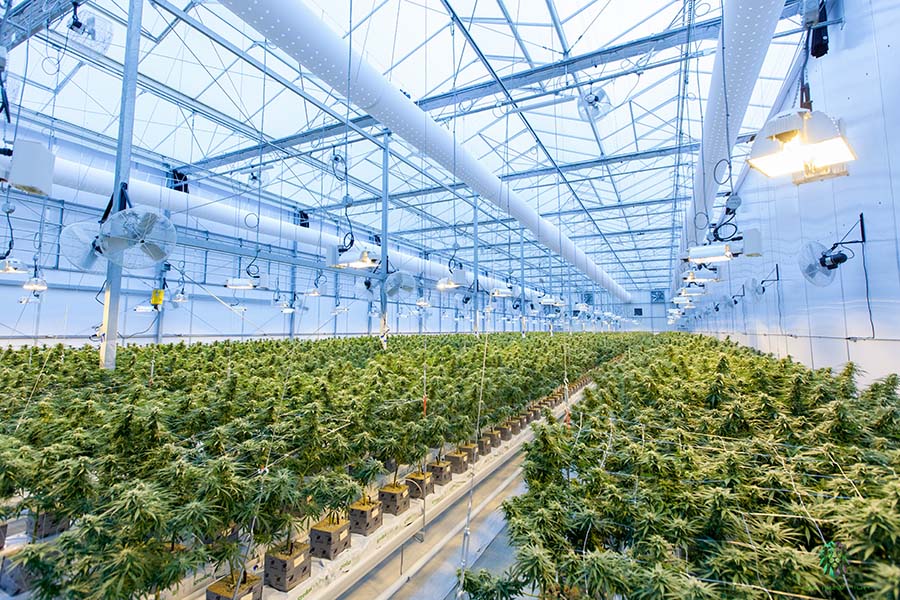
Cannabis cultivation across the Americas relies heavily on high-efficiency LED arrays and smart climate systems. Understanding the cannabis light saturation point is critical: when photon flux density exceeds dark reaction capacity, CO₂ diffusion and RuBP regeneration limit photosynthesis, leading to potential photoinhibition and light stress.
Cannabis cultivation in the Americas is primarily for medical and recreational purposes, utilizing advanced technologies such as LED lighting and smart climate control to ensure high quality and yield. Driven by legal reforms across North and South America—where markets utilize solutions such as lámparas de cultivo LED and luz LED para cultivos—the industry is rapidly growing and has become a significant economic pillar. To learn more about our commercial engineering expertise, explore our About Us page.
The cannabis light saturation point occurs in cannabis because, under strong light, the dark reaction (Calvin cycle) cannot keep up with the light-dependent reaction. This limitation caps the increase in photosynthetic rate as light intensity continues to rise. Understanding the balance between light compensation points (puntos de compensación de luz) and saturation points (punto de saturación de luz cannabis) allows growers to optimize photon delivery without wasting power.
Therefore, the main factors restricting photosynthesis during the saturation phase are:
Excessive light radiation without adequate CO₂ enrichment or temperature control can cause severe cannabis light stress, leading to photoinhibition of photosynthesis. This is especially true when other adverse environmental factors, such as low root zone temperatures or drought conditions, are present.
Furthermore, when plants grown under low-light conditions are suddenly exposed to high PPFD levels, the photosynthetic apparatus can suffer irreversible damage. Managing light transition ramps prevents pigment bleaching and structural breakdown in reaction centers.
Incorporating cannabis diffuse light within the lower canopy improves the overall phenotypic structure of cannabis plants. Unlike direct point-source light that creates harsh shadows and concentrated canopy hot spots, scattered diffuse photons penetrate deeper into lower foliage layers. This ensures uniform plant size, improved aesthetic appearance, and thicker leaf formation across every layer of the crop structure.
The following physiological parameters govern cannabis light responses across different cultivation stages, supported by research from institutions like the University of Florida IFAS Extension:
| Physiological Parameter | Typical Range ($\mu\text{mol/m}^2/\text{s}$) | Primary Limiting Factor | Cultivation Impact |
|---|---|---|---|
| Light Compensation Point | 20 – 50 | Photon Availability | Minimum threshold where respiration equals photosynthesis. |
| Vegetative Light Saturation | 400 – 600 | Enzymatic Reaction Rates | Optimal boundary before requiring supplemental CO₂. |
| Flowering Light Saturation (Ambient CO₂) | 800 – 1000 | CO₂ Diffusion Rate | Upper yield limit without environmental supplementation. |
| Flowering Light Saturation (Enriched CO₂) | 1200 – 1500+ | RuBP Regeneration Rate | Maximizes flower mass and secondary metabolite production. |
Looking to elevate yield quality and eliminate light stress in your commercial operation? Partner with FruitGrowLight for high-efficacy LED lighting systems engineered for precise light distribution.
Direct Contact: tadiran@tatalux.com
Scan QR code to chat with our grow light specialist!